
If you are looking for the best styling powder for short hair, you are probably dealing with a familiar problem: your hair is short, it should be easy, but it lies flat by mid-morning, looks thin at the front, or needs so much pomade or clay to hold a shape that it ends up looking greasy instead of textured. Styling powder — also sold as volumising powder, texture powder, or hair powder — solves that specific problem in a different way from every cream, paste, and pomade in your bathroom. It adds grip and lift at the roots without adding weight, shine, or a wet feel, and for short hair in particular, that difference matters.
This guide explains what styling powder actually is, how it works, who it suits and who should skip it, how to choose between the main types, and exactly how to apply it step by step so it looks natural instead of dusty or patchy. It also covers price bands honestly — powder is sold in very small containers that look expensive for their size, so cost per use matters more than the sticker — and it finishes with the mistakes that make powder fail, plus how powder compares with pomade, clay, and sea salt spray for short hair.
What styling powder is and how it works
Styling powder is a very fine, dry powder, usually based on silica silylate and similar lightweight ingredients, sometimes with starches that absorb oil. You shake or sprinkle a tiny amount onto dry hair, work it in with your fingertips, and the particles coat each strand and increase friction between strands. That friction is the whole mechanism. Hair that normally slips flat against itself suddenly grips, stands away from the scalp, and holds texture you create with your fingers.
Three effects follow from that grip. First, instant root volume: because the powder works where you place it, a small amount at the roots lifts short hair without backcombing or a blow-dryer. Second, a true matte finish: there is no oil or wax to reflect light, so the finish is dry and natural, which is why powder is popular for textured crops and messy, undone styles. Third, light oil absorption: the powder absorbs some scalp oil through the day, which is why hair styled with powder often looks fresher at 4 p.m. than hair styled with nothing — though powder is not a replacement for washing.
Hold is usually described as light to medium. That description undersells what powder does on short hair and oversells it on long hair. On hair under about three inches, the grip is enough to hold a crop, a short quiff, or a textured fringe in place for a normal day. On longer or very thick hair, the same amount will not control weight and movement, and adding more powder just makes the hair feel gritty. Length is the deciding factor, which is why this guide is specifically about short hair.
If you want the wider picture of where powder sits among all product types, our hub guide to the best hair products for men’s short hairstyles compares every category side by side.
Who styling powder suits best
Fine hair. This is powder’s strongest use case. Fine strands are light and flexible, so they collapse under creams and pomades. Powder adds almost no weight, so fine hair keeps the lift the powder creates. If that is your hair type, pair this guide with our best short haircuts for men with fine hair — the right cut plus powder is a much bigger improvement than either one alone.
Thin or thinning hair at the front and crown. By separating strands and adding matte texture, powder makes short hair look fuller. It does not cover a bare scalp and it is not a hair-loss fibre product — coloured keratin fibres are a different product entirely — but on hair that is present yet sparse, the added grip stops strands clumping together and showing scalp between them.
Wavy short hair that goes flat. Wavy hair has natural texture but often lacks root lift, especially on day two. A small amount of powder at the roots revives that texture without rewetting the hair. Our guide on how to style wavy short hair builds powder into a full daily routine if you want the complete system.
Oily scalps and second-day hair. Because powder absorbs some oil, it is one of the few styling products that works better on hair that was washed yesterday than on squeaky-clean hair.
Who should be careful: men with very dry, coarse, or tightly curled hair often find powder makes their hair feel rougher and harder to move, and men with a dry or flaky scalp may find it emphasises flakes because the finish is so matte. If your hair is thick and heavy and you need strong control, a matte clay will usually serve you better; powder can still help underneath it as a root pre-styler, covered below.
The best styling powder for short hair: what to look for
There is no single best styling powder for short hair for every man, because the useful differences are in format, strength, and finish — not in brand names. Owner feedback across product types is consistent on what actually matters in daily use, so judge any powder against these five criteria.
1. Application format: shaker, pump, or sprinkle top
Shaker pots are the most common: you shake a little powder into your palm or straight onto the roots. They are simple and cheap, but easy to over-apply. Pump-spray powders spray a measured puff directly at the roots, which gives better control and less mess, and usually sit in a higher price band. Sprinkle-top bottles sit between the two. For beginners, a pump is the most forgiving; for experienced users, a shaker used carefully is fine and lasts longest.
2. Hold level for your length
For a buzz cut, crew cut, or French crop under an inch on top, any standard powder provides more than enough grip. For a textured crop or short quiff at two to three inches, look for a powder described as strong or extra volume, and expect to use it over the whole top, not just the roots. If a powder only works for the first hour, the usual cause is applying it to damp hair, not a weak product — see the application steps below.
3. Finish: natural matte, not white or dusty
A good powder disappears into dark and light hair alike once it is worked in. A poor one leaves a grey or white cast, especially visible on dark hair and along the hairline. The fix in use is amount and distribution — work it in at the roots with fingertips until you cannot see it — but if a powder still shows after proper application, it is the wrong powder for your hair colour. Apply in daylight the first time you try a new one and check the hairline and parting in a mirror.
4. How it washes out
Most styling powders are water-soluble and rinse out with water or one normal shampoo. That is a genuine advantage over heavy waxes. If a powder leaves your hair feeling coated after washing, you are either using too much or layering it over other products for several days without a proper wash. A clarifying wash once a week is enough for daily powder users.
5. Size and cost per use
Powder containers are small — commonly around 10 to 20 grams — which shocks buyers who compare them with a full tin of pomade. But a single application is a fraction of a gram, so a small pot typically lasts one to three months of daily use. On price, most powders sit in the budget band (under about $12), the mid band (about $12 to $22), or the premium band (above about $22), with pump formats more often in the mid and premium bands. Cost per month is usually lower than pomade or clay, even when the sticker price looks similar. Formulation and format matter more than tier: a budget shaker applied correctly will outperform a premium powder dumped onto wet hair.
How to apply styling powder to short hair, step by step
Technique decides whether powder looks great or dusty. Follow this order.
Step 1 — Start with completely dry hair. This is the rule that cannot be bent. Powder on damp hair clumps, turns pasty, and loses its grip. Towel-dried is not dry enough; air-dry fully or blow-dry first.
Step 2 — Style the shape roughly with your fingers first. Powder locks in the direction your hair is already moving. Push your fringe forward, lift your quiff up, or sweep your top to the side before any powder goes in.
Step 3 — Apply a very small amount to the roots. Shake or pump a little onto your fingertips or directly at the roots in two or three spots: front, crown, and one side. You can always add a second tiny amount; you cannot easily remove an excess without washing.
Step 4 — Work it in with fingertips, lifting as you go. Massage at the roots for five to ten seconds, lifting the hair away from the scalp. Keep working until no powder is visible. This friction step is what creates the volume — sprinkling and leaving it does nothing.
Step 5 — Shape the final texture. Pinch small sections at the front for a crop, push the front up and slightly back for a short quiff, or rake through once for a messy crew. Then stop. Overworking powder-styled hair knocks the lift back out of it.
Step 6 — Optional: lock it with a tiny amount of a second product. If your hair is thick, or you need a crop to survive wind, a pea-sized amount of matte clay over powder gives strong control while the powder keeps the roots lifted. This powder-under-clay combination is the most reliable routine for men who found clay alone made their hair flat by lunchtime. If you prefer a single-product routine with more shine, our guide to the best pomade for men’s short hair explains when pomade is the better tool.
Total time is under a minute once the routine is familiar, and restyling during the day needs no more product: just re-work the roots with dry fingertips to reactivate the grip.
Powder compared with other products for short hair
Powder vs pomade. Pomade gives hold with shine and a combed, deliberate finish; powder gives texture with no shine and a natural finish. Pomade suits side parts and slicker short styles. Powder suits crops, messy texture, and flat fine hair. Heavy pomade is the product most likely to make fine short hair look thinner; powder is the least likely.
Powder vs matte clay. Clay gives stronger hold and more separation, and works on thicker hair. Clay is also heavier, so on fine hair it can pull volume down. They combine well, as described above, and our pomade and clay guides cover each in depth if you are choosing a main product.
Powder vs sea salt spray. Sea salt spray is applied to damp hair and adds loose, beachy texture, especially on wavy hair. Powder is applied to dry hair and adds root lift and grip. For wavy short hair, the two can work on different days: spray when you wash and style from damp, powder to revive the style the next day.
Powder vs hair fibres. These are not competitors. Fibres are coloured particles meant to camouflage visible scalp. Powder is a styling product that changes how your real hair behaves. Using powder expecting fibre-level coverage leads to over-application and a dusty result.
Common mistakes that make styling powder fail
Applying it to damp hair is mistake number one, for the reasons above. Using too much is number two: excess powder makes hair feel gritty, look dull grey, and tangle when you run your fingers through it. If you have overdone it, brush through with a dry brush or blast it briefly with a blow-dryer to shift some of the excess before reaching for the shampoo.
Third, applying powder only to the surface instead of the roots. Powder sitting on top of the hair is visible and does nothing; powder worked in at the roots is invisible and does everything. Fourth, expecting powder to control hair it cannot: a long fringe, heavy thick hair in wind, or a style that needs a slick finish will disappoint. Fifth, layering fresh powder over yesterday’s powder for many days running without washing — build-up accumulates, the scalp feels itchy, and the texture turns rough instead of light. Wash, dry fully, then start again.
Finally, a note on scalp comfort: if your scalp is sensitive, apply powder to the hair lengths and roots sparingly rather than massaging large amounts directly into the skin, and stop using any product that leaves your scalp persistently irritated.
Which short cuts work best with powder
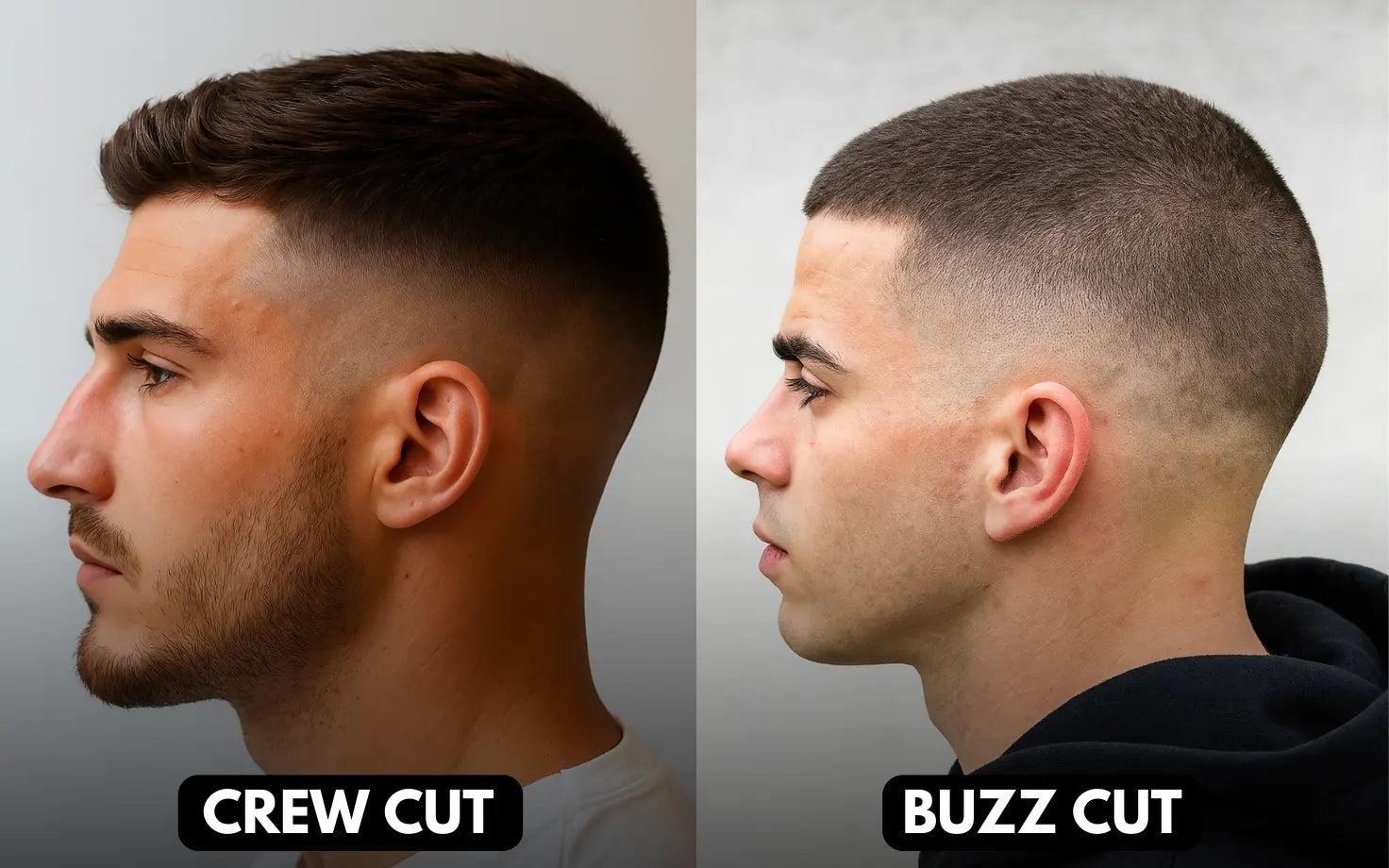
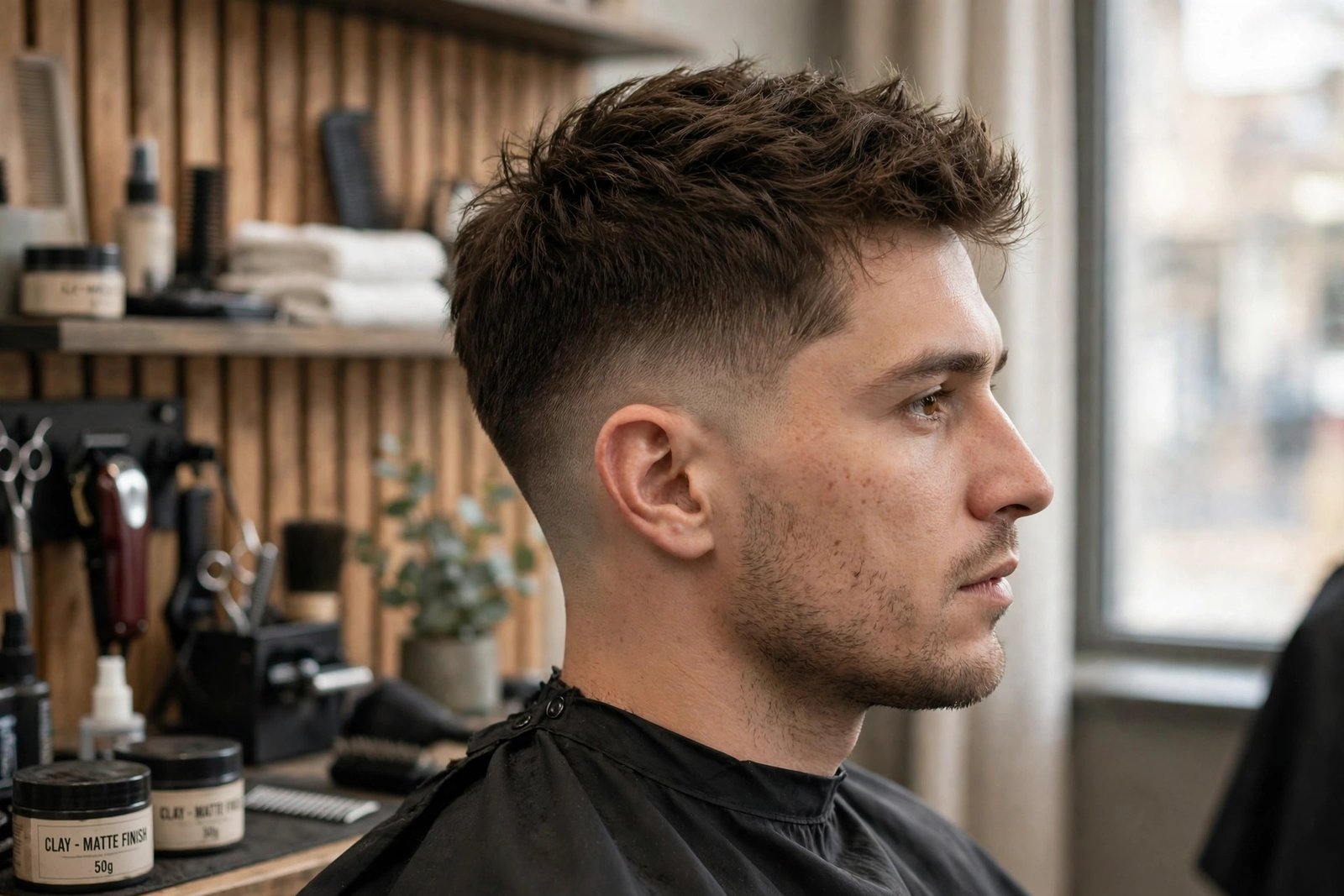
The textured crop is the ideal partner — powder was practically made for its forward, piecey fringe. The French crop and crew cut need only a fingertip of powder at the front to stop them lying completely flat. A short quiff gets its lift from powder at the front roots better than from heavy product through the lengths. Buzz cuts at guard lengths above about a number 4 can take a tiny amount for texture; below that, there is not enough hair for powder to grip and it is unnecessary. Side parts and slick styles are the exception: they are built on combed direction and usually some shine, so pomade or a light cream serves them better than powder.
Upkeep note: powder does not extend the life of a haircut. Crops and fades still need their normal barber cadence — roughly every two to four weeks depending on the cut — and powder works noticeably better in the first weeks after a cut, when the lengths are short enough for grip to become lift.
Frequently asked questions
What is the best styling powder for short hair?
The best styling powder for short hair is a matte, water-soluble powder in the format you can apply most precisely — a pump for beginners, a shaker if you have a light hand — with enough hold for your length. Fine and wavy hair need only a standard powder at the roots; a two-to-three-inch textured top benefits from a strong or extra-volume version. Judge by format, finish, and wash-out rather than by price tier.
Do you put styling powder on wet or dry hair?
Always on completely dry hair. Powder is designed to coat dry strands and create friction. On damp hair it clumps, looks white, and loses most of its holding power. If you blow-dry, finish drying fully, then apply powder as the last step.
How much styling powder should I use?
Far less than most men first try. Start with one small shake or one pump divided between the front and crown, work it in fully, and only add a second small amount if the lift is not there. If your hair feels gritty or looks grey, you have used too much.
Does styling powder damage hair?
Used normally and washed out regularly, styling powder is a surface styling product and does not change the hair itself. Problems come from build-up: layering it daily without proper washing can leave hair feeling dry and rough. One normal shampoo removes most powders, and a clarifying wash once a week suits daily users.
Can you use styling powder every day?
Yes, provided you wash it out regularly and your scalp stays comfortable. Many men use it on second-day hair specifically because it absorbs some oil. If your scalp becomes dry, flaky, or irritated, cut back, apply less directly to the scalp, and give your hair product-free days.
Is styling powder better than pomade for fine short hair?
For volume and a natural matte look, usually yes: powder adds grip without the weight and shine that make fine hair clump and look thinner. For a neat, combed side part or any style that needs shine and smooth control, a light pomade is the better tool. The two solve different problems, and many men own both.