
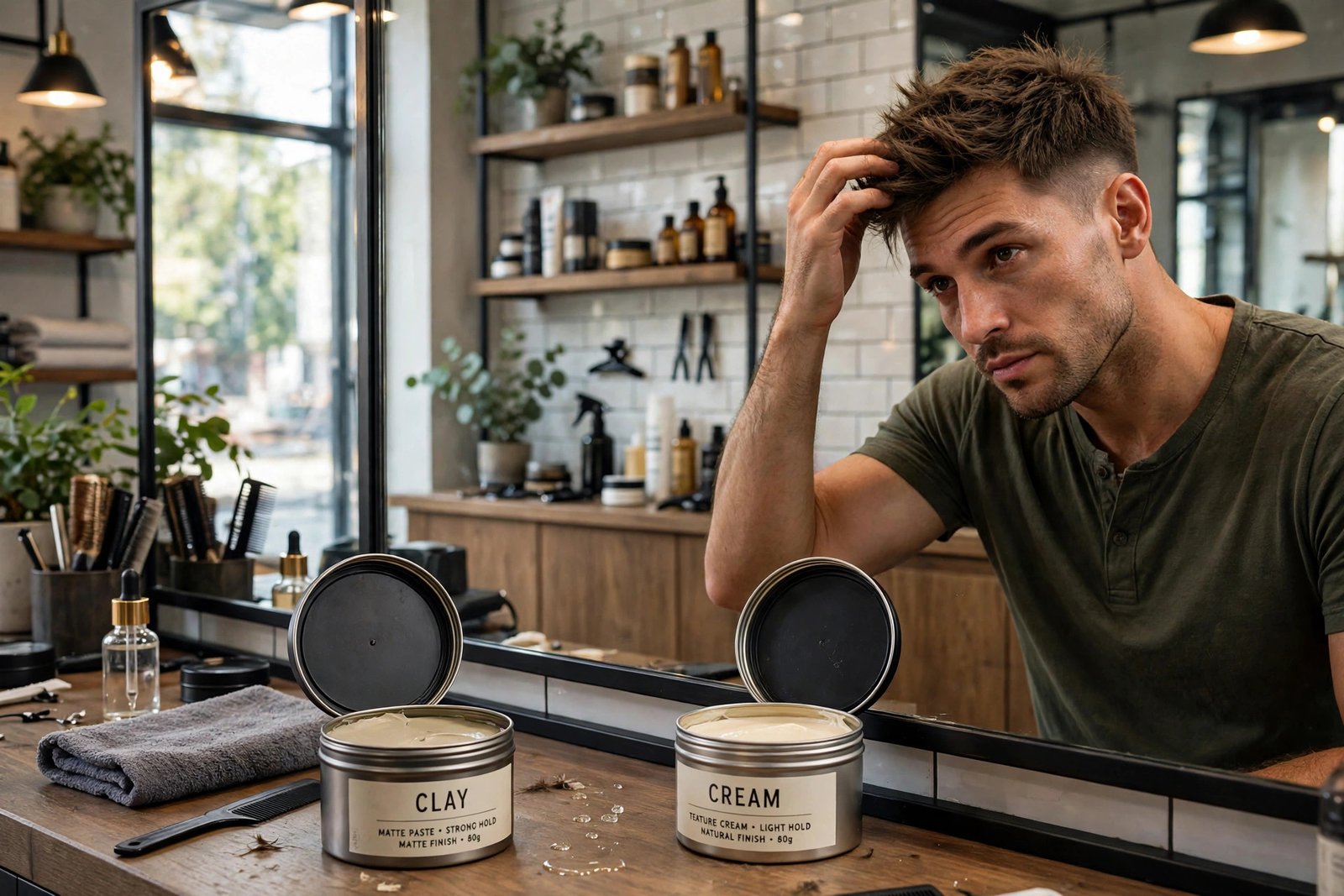
If you are choosing between pomade vs clay for short hair, the short answer is this: pomade gives you control, smoothness and shine for neat styles like a side part or a slicked quiff, while clay gives you dry texture, volume and a matte finish for messy, separated styles like a textured crop. Neither is better in general. They do opposite jobs, and picking the wrong one is the most common reason a good short haircut looks flat, greasy or unstyled by lunchtime.
This comparison is specific to short hair — roughly one to four inches on top. That matters, because short hair behaves differently from medium or long hair: there is less weight to hold a style down, less length for product to distribute through, and the scalp and hairline are much more visible, so shine, clumping and product build-up show faster. Everything below is framed for that length. If you want the full product landscape first, our hub guide to the best hair products for men’s short hairstyles covers pomade, clay, paste, wax and spray side by side; come back here when your choice has narrowed to these two.
The quick answer: pomade vs clay at a glance
| Pomade | Clay | |
|---|---|---|
| Finish | Low to high shine, smooth | Matte to very low shine, dry |
| Hold | Medium to firm, flexible | Medium to strong, textured |
| Best texture result | Sleek, combed, defined parts | Separated, piecey, natural-looking |
| Volume | Low to medium — can flatten fine hair | High — lifts and thickens the look |
| Best short cuts | Side part, slick back, neat quiff, classic taper styles | Textured crop, messy quiff, faux hawk, spiky short cuts |
| Best hair types | Straight, wavy, thick hair that needs control | Fine, thin, oily, straight or wavy hair that needs body |
| Re-style during the day | Yes, especially water-based and oil-based types | Limited — clay sets drier and resists reworking |
| Wash-out | Water-based: easy. Oil-based: needs shampoo, sometimes twice | Usually needs shampoo; clay minerals do not rinse out with water alone |
| Main failure mode | Looks greasy or collapses fine hair | Looks dry, dusty or clumpy if you use too much |
If you only remember one line: choose pomade when you want the hair to look combed and controlled, and choose clay when you want it to look textured and thicker than it is.
What pomade actually does on short hair
Pomade is a smooth, workable styling product built around control and finish. Traditional oil-based pomades use petrolatum and waxes for strong, lasting hold and a classic shine. Modern water-based pomades — the type most men with short hair should start with — give a similar combed finish but rinse out with water and feel lighter. A third group, matte or clay-pomade hybrids, tries to keep pomade’s smoothness with less shine; treat those as pomades for application purposes, because they still smooth and compress the hair more than a true clay does.
On short hair, pomade does three things well. First, it defines direction: a part line stays a part line, a sweep stays swept, and flyaways around the hairline and crown lie down instead of springing up. Second, it adds a finished, deliberate look — the difference between hair that was cut well and hair that was styled on purpose. Third, water-based pomades stay reworkable: you can re-comb after a hat, a workout or wind without adding more product.
Its weaknesses show up at short lengths too. Pomade adds weight and shine, and on fine or thin short hair that combination separates strands and can make the scalp show through, so the hair reads thinner, not neater. On very short tops — a crew cut at an inch or less — there is often not enough length to comb into direction, so pomade mostly adds shine you did not ask for. And oil-based pomade on a short cut that gets washed daily is unnecessary work: it builds up at the roots and needs a clarifying wash to fully clear.
For individual pomade picks by use case, see our guide to the best pomade for men’s short hair, which breaks down overall, thick-hair, thin-hair and matte options in detail.
What clay actually does on short hair
Hair clay is built around mineral clays such as bentonite or kaolin, mixed with waxes. The minerals are why clay behaves so differently: they absorb a little surface oil, swell slightly in the hair, and create friction between strands. That friction is the product — it is what lets short hair stand up, separate into pieces and hold texture instead of lying flat as one smooth sheet.
On short hair, clay does three things well. First, it creates volume without shine, which is exactly what fine, thin or flat-lying hair needs. Second, it makes texture visible: a point-cut crop or a choppy quiff actually looks textured rather than just shorter. Third, the matte, dry finish reads modern and natural — in most lighting it looks like hair with nothing in it, just better arranged.
Its weaknesses are just as specific. Clay is harder to distribute than pomade: it is thicker, drags more on dry hair, and punishes rushed application with white flecks or uneven clumps, especially on dark hair. It can feel drying, because the same oil absorption that helps oily hair can leave coarse or curly hair looking dull and rough if you use it daily at full strength. And clay is not a neatness product — if your style needs a crisp part, a smooth sweep or flyaways held flat, clay will fight you all day.
For clay picks and a deeper look at hold levels, see our guide to the best matte clay for short hair.
Pomade vs clay for short hair: the head-to-head differences that matter
Hold: flexible control versus textured grip
Pomade hold is smooth hold. The hair moves as a unit in the direction you combed it, and it can be re-combed back into place. Clay hold is grip hold. Individual sections stay where you pinched or pushed them, but the style does not comb back neatly once it has set. For a short side part you wear to an office, pomade hold is the right kind. For a crop you push forward and separate with your fingers, clay hold is the right kind. Judging one by the other’s standard — complaining that clay will not slick, or that pomade will not texturise — is where most bad reviews of both products come from.
Shine: the difference is bigger on short hair
Shine reads stronger on short hair because light reflects off a tighter, more uniform surface and the scalp is closer to the surface. A high-shine pomade on a two-inch top can look wet all day, which suits a deliberate classic style and looks wrong on a casual crop. Clay sits at the opposite end: truly matte, sometimes to a fault on dark hair, where over-application can look dusty. If you are unsure, the safe middle ground for most short cuts is a low-shine water-based pomade or a matte clay used sparingly — both read as natural in daylight.
Texture and thickness: clay’s clearest win
If your complaint is that your short hair lies flat, looks thin or will not show the texture your barber cut into it, clay wins this category outright. The friction and oil absorption make strands stand apart and look fuller. Pomade does the reverse: by smoothing strands together it can make thick hair look sleeker and more controlled, but on fine hair that same smoothing is a liability. Men with fine short hair who switch from pomade to clay usually describe the change as the haircut finally working — nothing about the cut changed, only the finish.
Application: pomade forgives, clay does not
Pomade spreads easily on damp or dry hair and distributes with a comb, so it is forgiving for beginners and for rushed mornings. Clay needs a proper routine: a pea-sized amount, warmed and emulsified fully between the palms until it turns clear and even, then worked into fully dry hair from the back forward. Skip the emulsifying step or apply clay to damp hair and you get weak hold and visible residue. This is a real deciding factor — if your mornings are two minutes long, pomade or a softer paste will serve you better than a firm clay you apply badly.
Wash-out and scalp feel
Water-based pomade rinses out with water and a light shampoo, which suits men who wash daily or have sensitive scalps. Oil-based pomade is the hardest wash-out in this comparison and is best reserved for men who deliberately want multi-day hold. Clay sits in the middle: water alone will not clear the mineral content, so plan on shampoo, and men who use clay daily should expect to need a thorough wash to prevent build-up at the roots feeling gritty by day three or four.
Which one suits your hair type?
Fine or thin hair: clay, almost always. You need volume and separation without weight or shine, and that is clay’s exact profile. Use a small amount on completely dry hair. Avoid oil-based and high-shine pomades entirely; a lightweight matte water-based pomade is the only pomade exception, and even then use half what you think you need. Our best hair paste for men’s short hair guide is also worth a look here, because paste sits between these two products and suits fine hair that finds clay too dry.
Thick or coarse hair: either, decided by style. Thick hair has natural volume, so clay’s main gift is wasted and its drag can make application hard work. If you want a neat, controlled finish, pomade — including firmer water-based formulas — tames thick short hair better. If you want a textured crop on thick hair, choose a strong clay and apply it in two small layers rather than one large one.
Straight hair: decided by cut. Straight short hair shows direction clearly, so pomade makes parts and sweeps look sharp. Straight hair that lies completely flat and forward is the classic clay case for crops and fringe styles.
Wavy hair: both work, for different looks. Pomade enhances wave definition and gives a polished, deliberate finish. Clay keeps the wave but makes it rougher and more separated. Pick by the finish you want, not by hold charts.
Curly short hair: pomade-leaning, with caution. Short curls usually need moisture and definition, not oil absorption. A light water-based pomade or a hybrid can define curls and control the outline without drying them. Firm clays tend to rough up short curls, separate them into frizz and leave the hair feeling dry; if you use clay on curls, keep it to a tiny amount on the top only and not as a daily product.
Oily hair and oily scalp: clay. Clay’s oil absorption extends a styled look through the day. Pomade — especially oil-based — adds to the problem and can look greasy by afternoon.
Dry hair or a dry, flaky scalp: pomade-leaning. A water-based pomade adds a smoother finish without stripping surface oil. Clay used daily can make dry hair look duller; if you prefer clay’s texture, use it on alternate days rather than every morning.
Which one suits your short cut?
Side part and classic taper styles: pomade. The part line, the sweep and the neat outline are pomade’s home ground. Water-based, low-to-medium shine is the modern default.
Slicked-back short top: pomade. Clay cannot produce a smooth slick and will break into rough sections if you try to force it.
Short quiff: either, by hair type. Thick or wavy hair holds a quiff with pomade’s control. Fine hair needs clay’s lift at the front — or clay at the roots with a touch of pomade only on the very front edge, a layering approach covered below.
Textured crop: clay. This cut exists to show separated texture pushed forward. Pomade smooths away the exact effect the cut was made for.
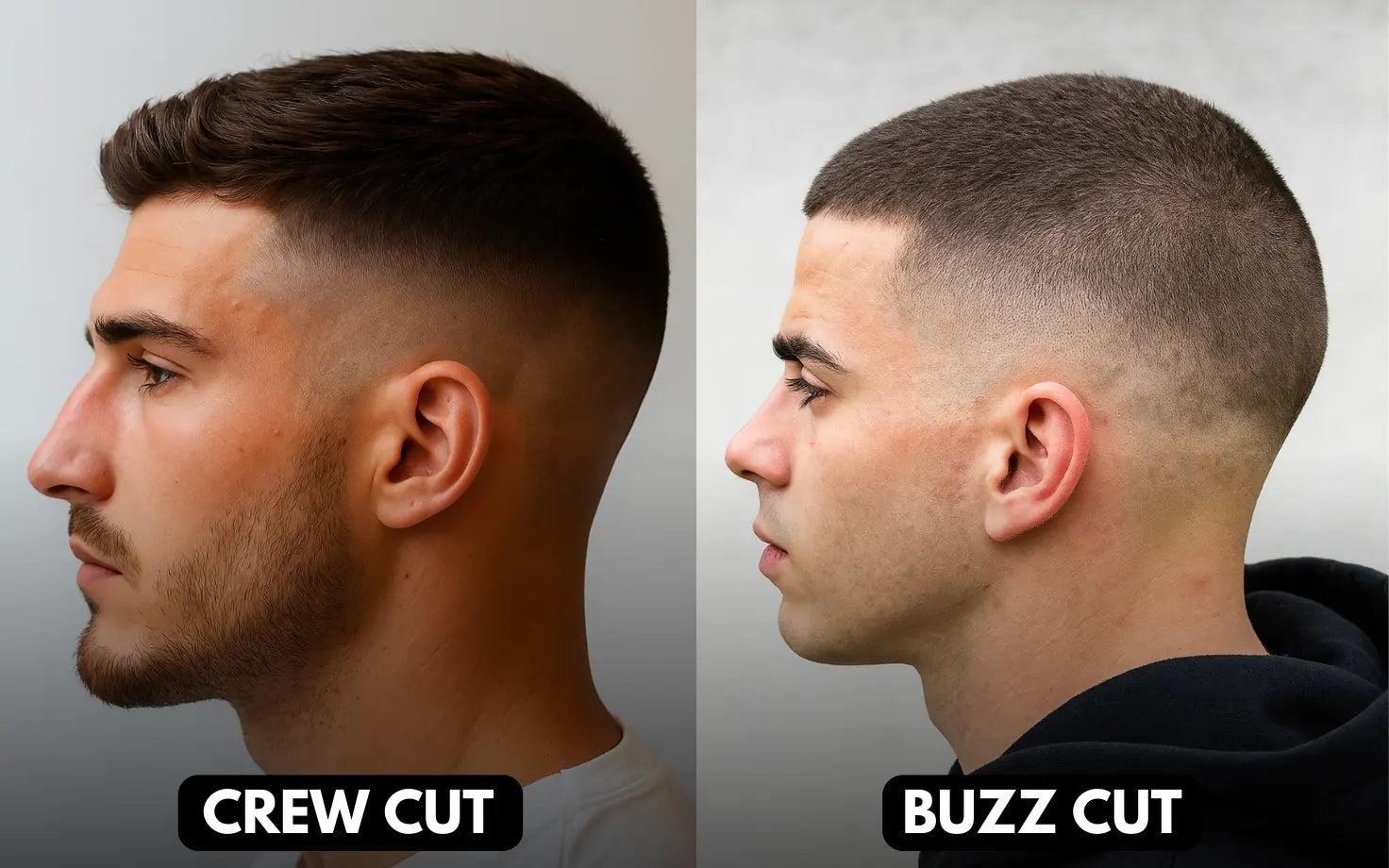
Crew cut and buzz-length tops: usually neither. At an inch or less there is little to style. A fingertip of matte clay can add slight separation to a longer crew top; pomade mostly adds unwanted shine. Save the money until the top grows past an inch and a half.
Faux hawk and spiky short styles: clay. Upward, separated, matte — every requirement on that list is clay’s, not pomade’s.
Short cuts with a fade: product choice follows the top, not the fade. The faded sides need no product at all. Choose by what the top is doing, using the list above.
How to apply each one properly
Pomade on short hair: step by step
- Start with clean, towel-dried hair — damp, not wet. Pomade on soaking hair loses hold and adds excess shine.
- Use a pea-to-dime-sized amount for short hair. Scoop, warm it between your palms, then work it through from the back and sides first, finishing on top, so the front does not get a concentrated blob.
- Comb or finger-comb into the final direction while the product is still workable: part first, then sweep, then tidy the hairline.
- Leave it for two minutes, then do a final check in profile. Add a second fingertip only where control is missing — never restart with a full second dose.
Clay on short hair: step by step
- Start with completely dry hair. This is non-negotiable for firm clays; damp hair cuts clay’s hold sharply.
- Use a pea-sized amount — clay is concentrated and short hair needs less than you expect. Emulsify between your palms until there is no visible product left; your palms should look clear and feel tacky.
- Work it in back to front and root to tip, raking with spread fingers. Getting clay to the roots is where the volume comes from.
- Shape with your fingers only: push a crop forward and pinch the ends into pieces, lift a quiff up and slightly back, separate a fringe into sections. Do not comb clay smooth — you will undo its texture.
- Check for white flecks or dusty patches in good light, especially on dark hair, and work any you find in with dry fingertips.
Can you use both? Layering pomade and clay
Yes, and for one common case it is the best answer: a fine-haired quiff or side sweep that needs clay’s lift but pomade’s tidy finish. The order matters. Apply a small amount of clay first, to dry hair, for lift and texture. Then, once the shape is set, use a fingertip of water-based pomade smoothed only over the surface and edges — the part line, the front sweep, the flyaway zones around the hairline. Reversing the order does not work: clay over pomade will not grip, and mixing the two in your palms first usually gives you the weaknesses of both. Keep both amounts small; layering is about placement, not quantity. If you find yourself layering every day and still fighting the style, the honest answer is usually that a third product — paste — was designed for exactly your middle-ground case, which is why we covered it separately in the paste guide linked above.
The mistakes men make with both products
Using too much. Short hair needs a pea-to-dime-sized amount of either product. Most “this product doesn’t work” stories are double or triple that amount, which makes pomade greasy and clay clumpy in exactly the same way.
Applying to the wrong hair state. Pomade belongs on damp hair, clay on dry hair. Swapping those two states is the single most common application error in this whole comparison.
Choosing by hold number alone. A “strong hold” pomade and a “strong hold” clay hold in completely different ways, as the head-to-head section explains. Choose by finish and texture first, hold second.
Judging in bathroom light only. Shine products in particular look different outdoors. Check a new pomade in daylight before deciding it is too shiny or just right.
Never washing build-up out. Both product families build up at the roots over a week of daily use, oil-based pomade fastest and clay close behind. One thorough shampoo wash — twice through if the hair still feels coated — resets it. Dull, unresponsive hair that suddenly will not style is usually build-up, not a failed product.
What should you expect to pay?
Treat price in bands rather than exact figures, because prices vary by retailer and region and change over time. In broad terms, both pomades and clays for men sit in the same three bands: budget drugstore tins at the low end, the large mid-range of barber and grooming brands where most short-hair staples live, and a premium band for boutique and salon labels. For short hair the mid-range is the sensible default for both products: a single tin lasts a long time at a pea-sized amount per day, so cost per use is low, and the performance gap between mid-range and premium is far smaller than the gap made by applying the product correctly. Pay for the formula type you need — water-based pomade that washes out, or a true mineral clay rather than a product merely labelled with the word — rather than for packaging or fragrance.
Frequently Asked Questions
Is clay or pomade better for short hair?
Neither is better overall. Pomade is better for neat, combed, controlled short styles such as side parts and slicked quiffs, especially on straight, wavy and thick hair. Clay is better for textured, matte, voluminous short styles such as crops and messy quiffs, especially on fine, thin or oily hair. Choose by your cut and hair type using the sections above, not by which product is more popular.
Can clay damage short hair or dry it out?
Clay does not damage hair in normal use, but its oil-absorbing minerals can leave hair feeling dry and looking dull if you use a firm clay every day, particularly on coarse, curly or already-dry hair. Using a pea-sized amount, washing it out properly with shampoo, and alternating with a lighter product or a product-free day solves the problem for most men.
Does pomade cause hair loss or thinning?
There is no good evidence that pomade itself causes hair loss. What pomade can do — especially heavy or high-shine formulas on fine hair — is make thinning more visible by smoothing strands together and adding shine that shows the scalp. That is a styling effect, not hair loss, and it is why this guide steers fine and thin hair towards matte clay instead.
How much pomade or clay should I use on short hair?
Start with a pea-sized amount for clay and a pea-to-dime-sized amount for pomade. Short hair needs far less than most men scoop out. Add a second fingertip only in the specific area that needs more control, rather than applying a full second dose everywhere.
Can I use pomade and clay together?
Yes, in the right order: clay first on dry hair for lift and texture, then a fingertip of water-based pomade smoothed only over the surface and edges for a tidy finish. Do not mix them in your palms and do not reverse the order — clay will not grip over pomade.
Which washes out more easily?
Water-based pomade washes out most easily, often with water and a light shampoo. Clay needs a proper shampoo because its minerals do not rinse out with water alone. Oil-based pomade is the hardest of the three to remove and can need two shampoo passes or a clarifying wash.
The short version
Pomade vs clay for short hair comes down to one question: should your hair look combed or textured? Combed, smooth and controlled — side parts, slick styles, neat quiffs on thicker hair — means pomade, water-based for easy wash-out. Textured, matte and fuller-looking — crops, messy quiffs, any style on fine or oily hair — means clay, used sparingly on completely dry hair. Get the hair state and the amount right, and either product will do its job; get the category wrong for your cut, and no amount or brand will fix it.