
Disclosure: As an Amazon Associate, we earn from qualifying purchases made through links on this page, at no extra cost to you. Picks below are based on manufacturer specifications, guard and blade systems, and aggregated owner feedback — not hands-on lab testing. Prices move; we give typical price bands instead of a single figure so you can sanity-check the current listing. See our affiliate disclosure for how this works.
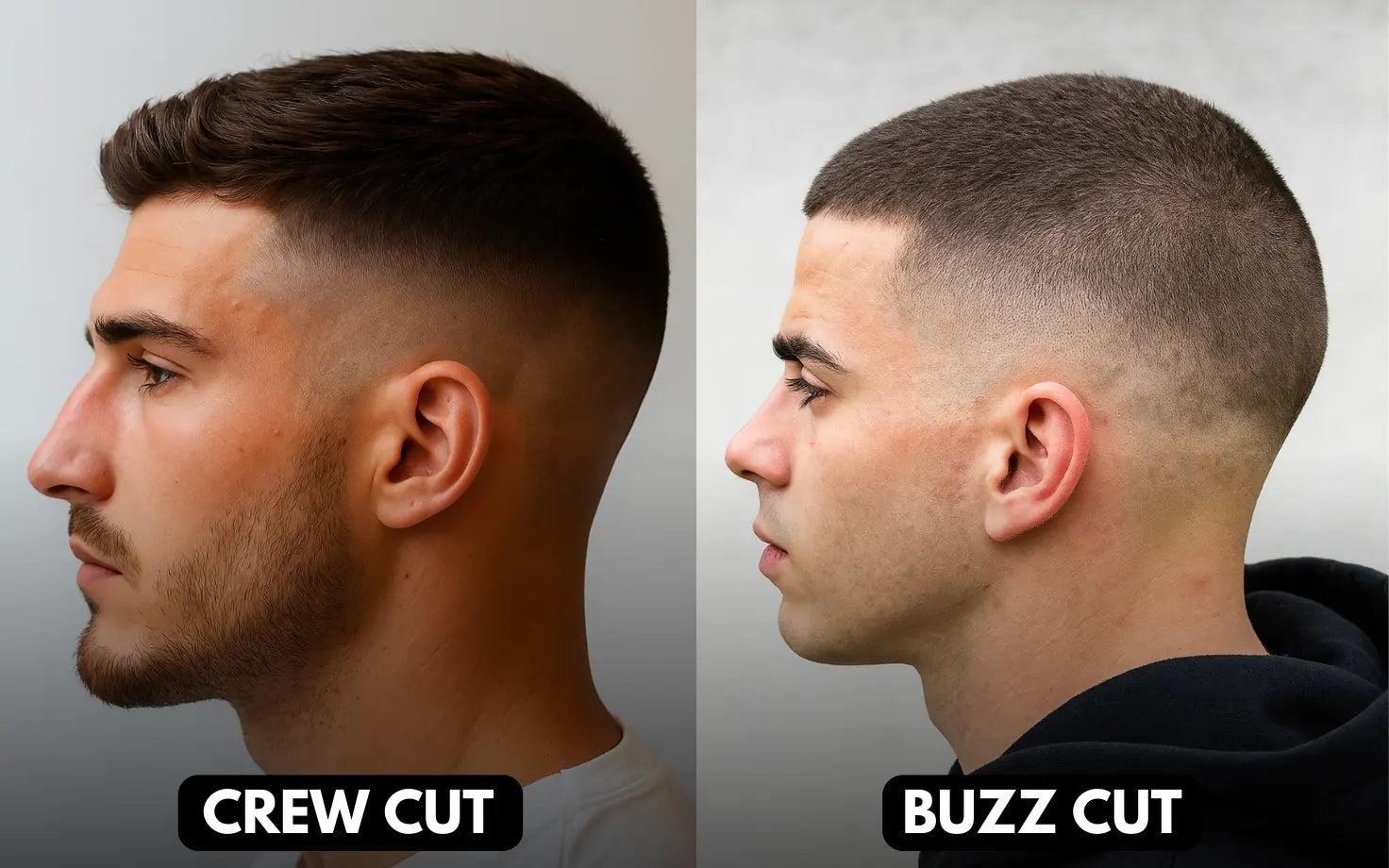
Cutting short hair at home is mostly a tools question. Short styles show every missed patch and uneven blend, so a weak motor, a limited guard set, or a dull blade turns a ten-minute cleanup into a frustrating half hour. The good news: the home market is well served at almost every budget, and the right answer depends on which of three jobs you’re actually doing — full haircuts, self buzz cuts and upkeep between barber visits, or detail work on edges and necklines.
This guide names specific models for each job, explains the specs that separate them, and covers the maintenance that keeps a clipper cutting like new for years.
Quick Picks
| Category | Pick | Why |
|---|---|---|
| Best overall clipper | Wahl Magic Clip Cordless | Fade-friendly stagger-tooth blade, taper lever, cord/cordless, ~90 min runtime |
| Best budget kit | Wahl Elite Pro | Complete home kit with full guard set and a strong motor for the price band |
| Best cordless | BaBylissPRO FX870 (FX Clipper) | High-torque brushless-style motor, metal housing, ~2-hour lithium runtime |
| Best for fades | Andis Master (corded) | Legendary adjustable blade (000–1) and magnetic motor; the barbershop standard |
| Best for self-cuts | Remington Shortcut Pro | Curved, extra-wide blade designed to follow the head for solo buzz cuts |
| Best detail trimmer | Andis T-Outliner | T-blade for sharp lines, neckline, and dry shaving; corded reliability |
| Best cordless trimmer | Andis Slimline Pro Li | Light, slim, ~2-hour runtime; easy around ears and neckline |
| Best travel / all-in-one | Philips Norelco Multigroom 9000 series | One handle for beard, edges, and body; compact kit, long runtime |
How We Choose
We compare clippers and trimmers on the things that decide whether a home haircut goes well:
- Motor type and cutting power — whether it pulls or stalls in thick hair (motor types explained below).
- Blade system — adjustable taper lever vs fixed blade vs detachable blades, and how fine the adjustment is for blending.
- Guard range included — a useful home set covers at least #1–#8 plus half sizes for fading; lengths are charted in clipper guard sizes explained.
- Power format — corded (unlimited runtime, consistent power), cordless (freedom, battery limits), or both.
- Owner feedback patterns — recurring strengths and complaints across many verified buyers (heat, noise, battery longevity, guard fit), rather than any single review.
- Price band and running costs — replacement blades, guards, and whether the tool is built to be serviced or replaced.
No manufacturer pays for placement here, and we list a “skip it if” note under picks where a model genuinely isn’t right for some users.
Best Clippers, Pick by Pick
Best Overall: Wahl Magic Clip Cordless
The cordless Magic Clip is the easiest single recommendation for men who cut their own short hair or maintain fades at home. Its stagger-tooth blade — teeth of two lengths — is designed to feed hair more evenly during blending, which is why this model is a long-running favorite for fade work. The adjustable taper lever moves the blade through the fine range between guard sizes, so you can soften a blend line without swapping guards.
It’s a rotary-motor, cord/cordless clipper: run it plugged in or on its lithium battery (rated around 90 minutes). The housing is a lightweight plastic, which some men read as less “premium” than metal-bodied rivals — but at home, lighter is easier to maneuver around your own head. Typical price band: roughly $100–$160.
Best for: full home haircuts, fades, and one-tool ownership.
Skip it if: you want a heavy metal housing or regularly cut very long, dense hair in bulk — look at the FX870 or a corded pro model instead.
Best Budget Kit: Wahl Elite Pro
The Elite Pro is Wahl’s home-kit answer: a corded clipper with a strong electromagnetic-style motor for the class, a taper lever, and one of the more complete guard sets in its band — including the small half-size and ear-taper guards that cheap kits omit. The guards are the secure-fit style that actually stay on, which matters more than any spec on the box when you’re buzzing the back of your own head.
It’s corded only, so runtime is unlimited but you’re tethered. For buzz cuts, crew cuts, and kids’ cuts at home, that’s a fair trade. Typical price band: roughly $40–$70 for the full kit.
Best for: buzz cuts and family haircuts on a budget; first home clipper.
Skip it if: you specifically want cordless freedom or do skin fades — add a half-guard set and expect more blending patience.
Best Cordless: BaBylissPRO FX870 (FX Clipper)
The FX870 is the premium cordless option: a high-torque motor (BaBylissPRO’s Ferrari-designed engine program), an all-metal housing, a knurled grip, and a lithium battery rated around two hours — enough for many home cuts between charges. The taper lever offers fine, click-style adjustment, and it runs corded or cordless. In owner feedback it consistently scores for power through thick hair and for not heating up during longer sessions.
Typical price band: roughly $180–$230, which is professional money. For one haircut every three weeks at home it is more tool than you need; for men who cut their hair weekly and hate charging, it’s the one to get.
Best for: frequent self-cutters, thick hair, buy-it-once shoppers.
Skip it if: you only do an occasional buzz — the Elite Pro or Color Pro class does that job for a third of the price.
Best for Fades: Andis Master (Corded)
The Master is the aluminum-housed, magnetic-motor clipper that has sat on barbershop counters for decades. Its single lever adjusts the blade from 000 (near-skin) to 1 (about a #1 guard) — exactly the range where fades are won and lost — and the magnetic motor runs fast and cool enough for continuous work. Because it’s corded, power never fades mid-blend.
Two honest trade-offs: it’s heavy for a home tool, and it gets warm in the hand during long sessions. It also ships as a bare clipper — guards are a separate purchase (Andis’s magnetic guard set is the usual pairing). Typical price band: roughly $110–$160, plus guards.
Best for: men serious about home fades and blending.
Skip it if: you want an all-in-one box with guards included, or a light tool for quick buzzes.
Best for Self-Cuts: Remington Shortcut Pro
Cutting the back of your own head is an ergonomics problem, and the Shortcut Pro is built specifically for it: an extra-wide, curved blade that wraps the shape of the head, a palm-held body you grip like a brush, and a set of guards covering the usual buzz range (it includes lengths roughly from #1 up to a longer top length, plus a balding blade option in some kits). It won’t blend a fade like the Magic Clip, but for an even one-length or two-length buzz done solo in front of a mirror, it’s the most forgiving design in this guide. Cordless with a modest runtime suited to short sessions. Typical price band: roughly $50–$80.
Best for: solo buzz cuts and short uniform styles.
Skip it if: you want fades, tapers, or any real blending.
A note on a home staple: Wahl’s Color Pro line (color-coded guards) remains a sensible ultra-budget pick for simple buzz cuts — the color coding genuinely helps beginners — but the Elite Pro above is the better buy if the price gap is small.
Best Trimmers for Edges and Cleanup
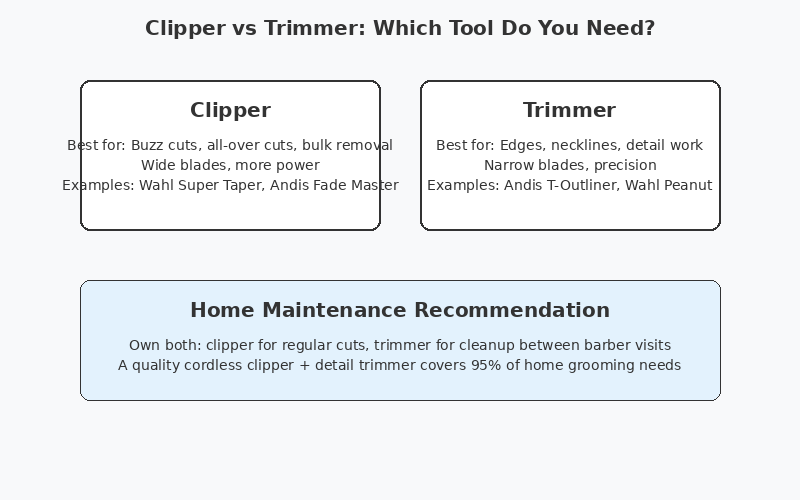
A clipper cuts bulk; a trimmer finishes. If you only maintain a barber cut between visits, a trimmer may be the only tool you need — neckline, around the ears, sideburns, and beard edges.
Andis T-Outliner (corded)
The T-Outliner is the standard detail trimmer: a T-shaped blade that lets you see exactly where the line goes, a magnetic motor, and a corded design that never dies mid-cleanup. It’s the tool for crisp hairlines, sharp beard geometry, and dry shaving small areas. Typical band: roughly $60–$90. Skip it if you hate cords entirely.
Andis Slimline Pro Li (cordless)
The slim, light alternative: a T-blade trimmer with a lithium battery rated around two hours, in a narrow body that’s easy to angle around ears and the neckline. Slightly less raw power than the T-Outliner, far more convenient. Typical band: roughly $70–$100.
Wahl Peanut
A tiny, inexpensive corded trimmer shaped like its name, with a small set of guide combs. It won’t replace a clipper, but as a second tool for edges and travel-bag cleanup it’s been a value pick for years. Typical band: roughly $30–$50.
Philips Norelco Multigroom 9000 Series (all-in-one)
If your “haircut” is mostly beard, edges, and body grooming with occasional short trims, the Multigroom kits trade raw clipper power for versatility: one handle, many heads, very long runtimes, and a compact case. Typical band varies widely by kit size, roughly $60–$120. Not the tool for full short haircuts on thick hair.
Side-by-Side: The Main Picks
| Model | Type | Motor | Power | Battery (rated) | Blade / adjustment | Typical price band |
|---|---|---|---|---|---|---|
| Wahl Magic Clip Cordless | Clipper | Rotary | Cord / cordless | ~90 min | Adjustable, stagger-tooth | $100–$160 |
| Wahl Elite Pro | Clipper kit | Electromagnetic (home class) | Corded | — | Adjustable, taper lever | $40–$70 |
| BaBylissPRO FX870 | Clipper | High-torque (brushless-class) | Cord / cordless | ~2 hrs | Adjustable, metal housing | $180–$230 |
| Andis Master | Clipper | Magnetic | Corded | — | Adjustable 000–1 | $110–$160 |
| Remington Shortcut Pro | Self-cut clipper | Rotary | Cordless | Short sessions | Fixed curved wide blade | $50–$80 |
| Andis T-Outliner | Trimmer | Magnetic | Corded | — | T-blade | $60–$90 |
| Andis Slimline Pro Li | Trimmer | Rotary | Cordless | ~2 hrs | T-blade | $70–$100 |
Buying Factors That Actually Matter
Motor type. Magnetic motors (Andis Master, T-Outliner) run fast and are great for fine-to-medium hair and detail work. Rotary motors (most cordless models) deliver steadier torque across hair types and power most cord/cordless designs. Pivot motors sit between the two in cheaper corded tools. High-torque and brushless-class motors in premium cordless clippers (FX870) are the closest cordless gets to corded consistency. For thick or coarse hair, prioritize torque over blade speed claims.
Blade system. An adjustable blade with a taper lever is what lets you blend — for anything beyond a one-length buzz, this is non-negotiable. Detachable-blade systems (pro Oster-style) swap whole blades per length: fast and durable, but a bigger investment, and overkill for most homes. Fixed blades (self-cut and budget tools) are fine for uniform lengths only.
Battery and cord. Lithium cordless tools in this guide are rated roughly 90 minutes to 2 hours — several home cuts’ worth. What matters more: whether the tool also runs corded (all three main clipper picks above do, except the Shortcut Pro), because a dead battery mid-haircut is a real scenario. Corded tools trade freedom for unlimited, undiminished power.
Guards included. Confirm the set covers #1–#8 and check for half sizes (#0.5, #1.5) if you fade — they’re the sizes beginners most often discover they’re missing, and they’re explained in clipper guard sizes explained.
Weight and grip. You’ll hold this over your own head, backwards, in a mirror. Under roughly a pound, with a shape you can re-grip, beats metal prestige for most home users. The pros’ metal tools earn their weight in a barber’s hand, cutting all day — different job.
Clipper and Trimmer Maintenance
Five minutes of care is the difference between a two-year tool and a ten-year tool:
- Brush out hair after every use — clippings left in the blade corrode it and dull the cut.
- Oil the blade with clipper oil (a drop on the teeth and corners) before or after each use. If a clipper starts pulling, oil is the first fix, not a new blade.
- Disinfect when the tool touches skin closely — a clipper disinfectant spray after lineup work, especially if more than one person uses it.
- Check blade alignment on trimmers if lines start cutting unevenly or nicking; T-blades can shift when dropped. Most brands sell an alignment tool or describe a simple manual reset.
- Store dry, guards off the blade, and don’t wrap the cord tightly around the body — cord strain at the entry point is the most common way corded tools die.
- Battery care: for cordless tools, avoid storing fully dead for months; a partial charge is kinder to lithium cells.
Replaceable blades and guards are available for every pick in this guide — a dull-blade replacement (typically in the $15–$35 band) restores a clipper for a fraction of a new tool.
Common Buying Mistakes
- Buying a trimmer to do a clipper’s job. Trimmers can’t move bulk hair; a full cut with one takes forever and overheats the tool.
- Paying for a pro clipper but no guards. The Andis Master class ships bare. Budget the guard set in.
- Choosing by watts or “turbo” labels. Motor type and blade quality predict cutting far better than marketing numbers.
- Skipping the taper lever to save money, then discovering fades are impossible to blend.
- Buying detachable-blade pro gear for a monthly buzz cut. Excellent tools, wrong job — a $50 kit does it identically.
FAQ
What is the best clipper for cutting your own short hair at home?
For most men, the Wahl Magic Clip Cordless: it’s light enough to use on your own head, blends with its taper lever and stagger-tooth blade, and runs corded or cordless. If your cut is a simple one-length buzz, the Remington Shortcut Pro is even easier solo, and the Wahl Elite Pro is the budget answer.
Do I need both a clipper and a trimmer?
If you do full haircuts, a clipper alone can finish the job, but a trimmer makes necklines, ear arches, and beard edges noticeably cleaner and faster. If you only touch up a barber’s cut, a trimmer alone (T-Outliner or Slimline Pro Li) may be all you need.
Are cordless clippers as powerful as corded?
The better lithium models (FX870, Magic Clip Cordless) are close enough that most home users won’t feel a gap, and they hold enough charge for several cuts. Corded still wins on unlimited runtime and consistent power through very thick hair, which is why the Andis Master remains the fade pick here.
How much should I spend on a home clipper?
A complete, capable kit lands in the $40–$70 band (Elite Pro class). Stepping up to roughly $100–$160 buys cordless freedom and better blending blades (Magic Clip class). Above that you’re paying for metal housings, longer battery life, and pro durability — worth it for weekly cutters, unnecessary for monthly buzzes.
How long do clipper blades last?
With brushing and regular oiling, home-use blades typically last years. Pulling, snagging, or visibly uneven cutting that oiling doesn’t fix means it’s time for a replacement blade — every pick in this guide has one available.