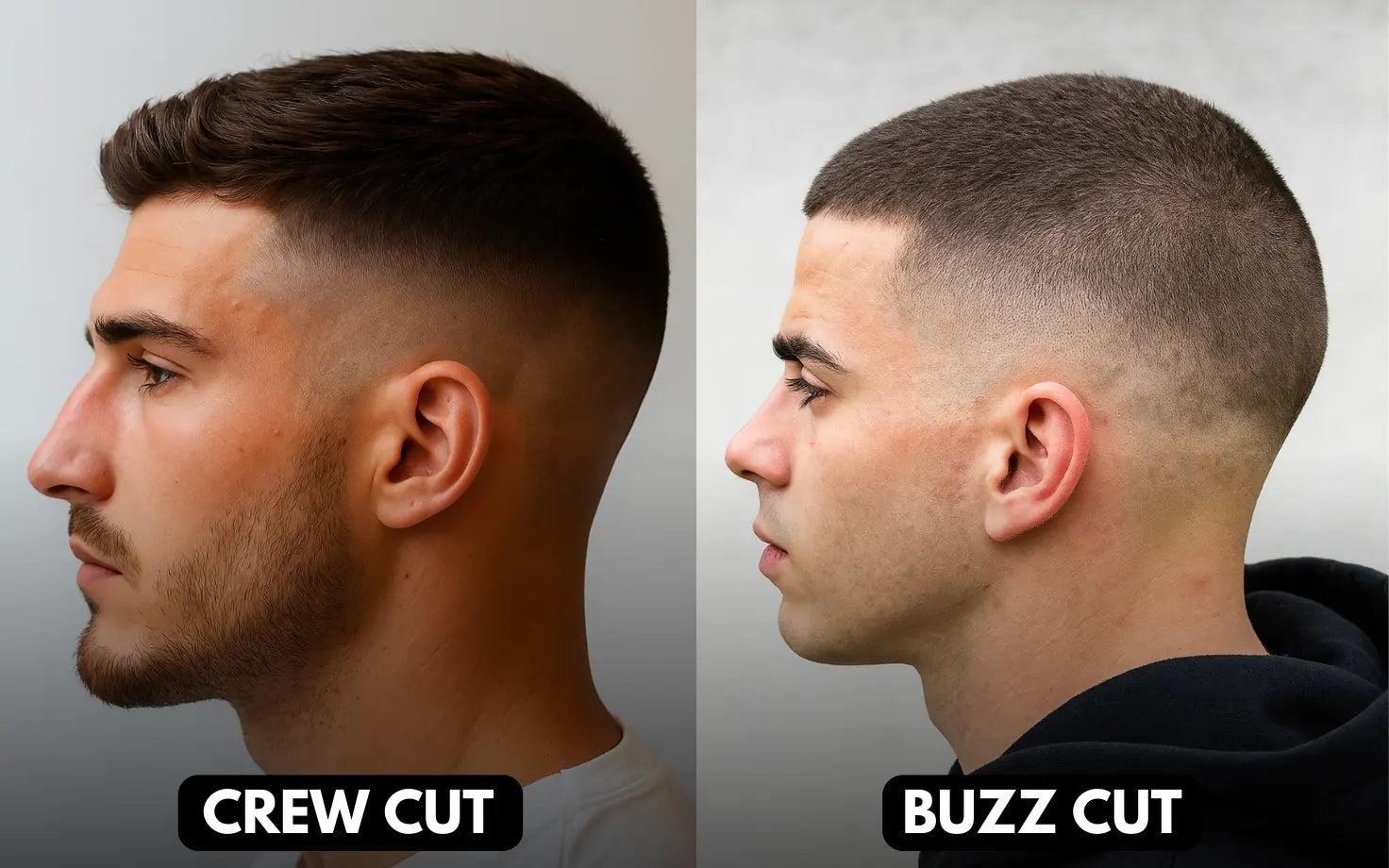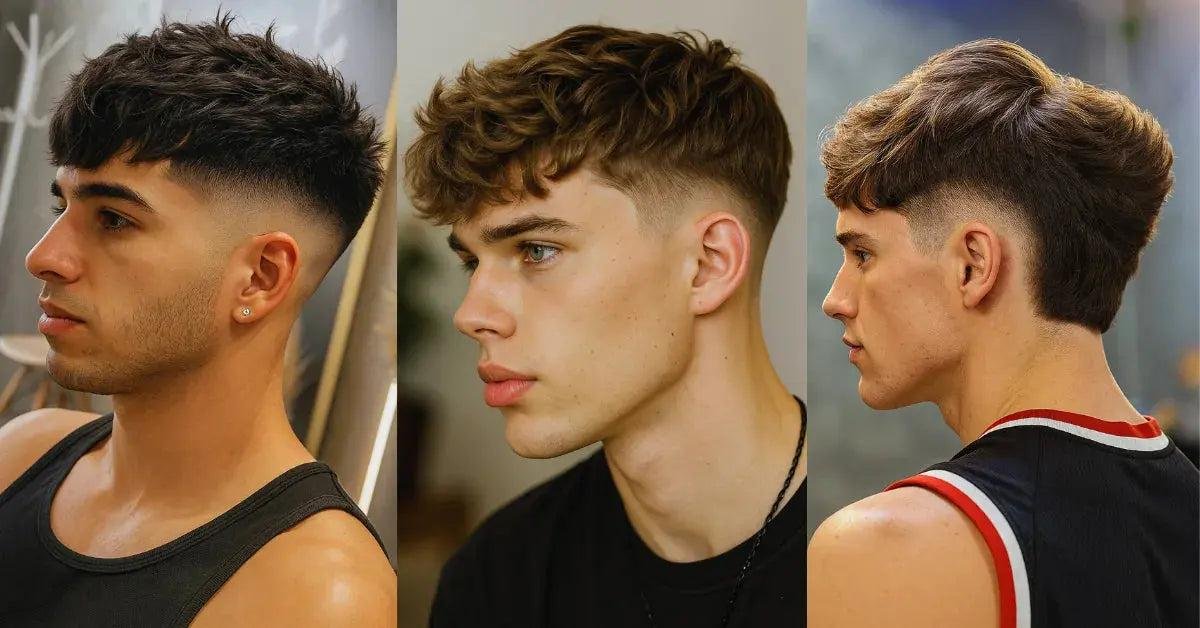

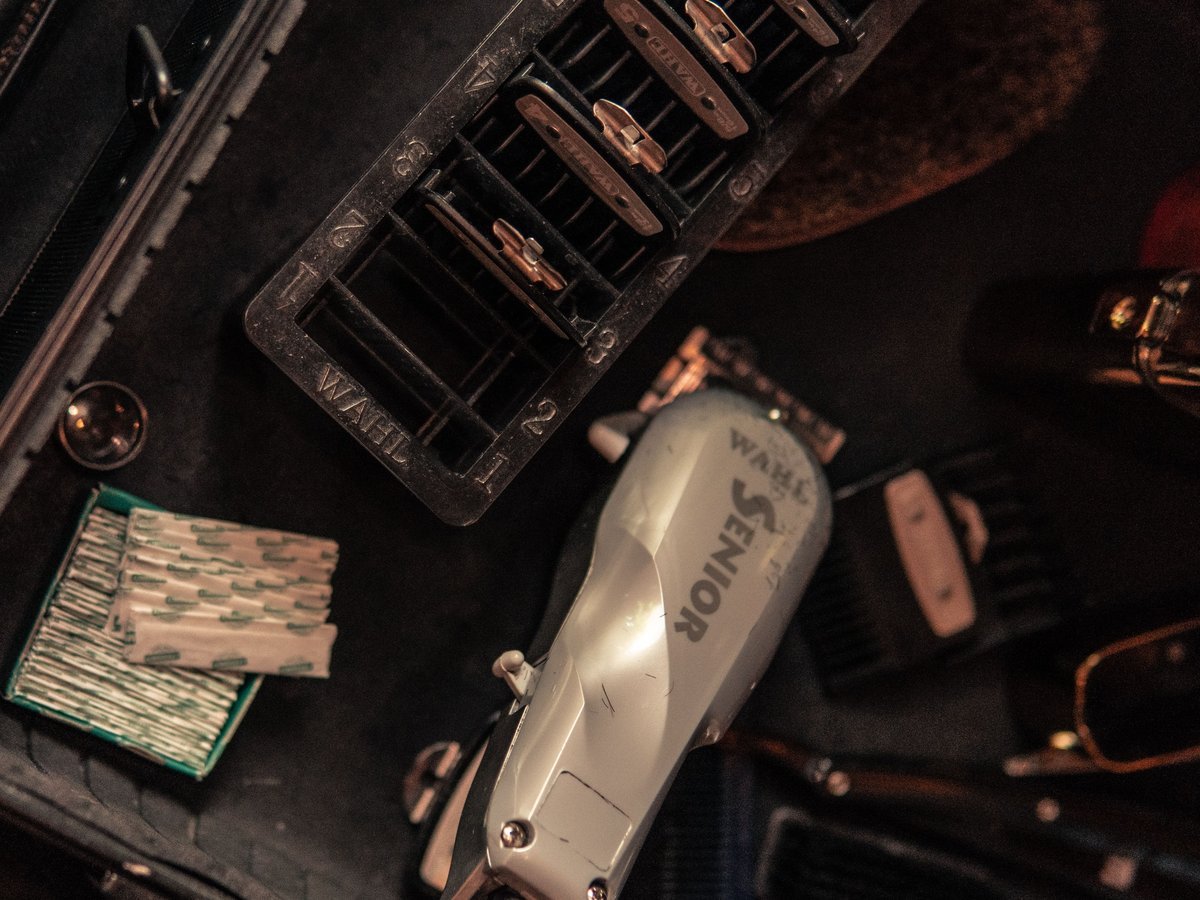
Clipper guards look simple — snap one on, and the clipper leaves a set length of hair. The confusion starts because the number on the guard is not a length in any unit you use elsewhere, half sizes exist but are rarely explained, and one major brand (Oster) ignores guards almost entirely in favor of detachable blades. This page is the full reference: every standard guard size in inches and millimeters, what each one actually looks like on a head, which haircuts use it, and how to pick the right size for the cut you want.
Keep one rule in mind before anything else: you can always take more hair off, but you can’t put it back. When you’re between two sizes, start with the bigger number.
The Complete Clipper Guard Size Chart
Full guard sizes step up in even 1/8-inch increments. That system is consistent across Wahl, Andis, BaBylissPRO, Remington, and Philips Norelco — a #3 leaves 3/8 inch of hair no matter whose logo is on the clipper.
| Guard | Inches | Millimeters | What it looks like | Commonly used for |
|---|---|---|---|---|
| No guard (lever closed) | ~0–1/32 in | ~0.5 mm | Skin-close stubble, almost bare | Skin fades, bald fades, lining the bottom of a fade |
| #0 | 1/16 in | 1.5 mm | Heavy stubble; scalp clearly visible | Bald fades, the bottom section of a skin fade |
| #0.5 (half guard) | 3/32 in | 2.4 mm | Very short shadow of hair | Blending a skin fade into a #1, tight tapers |
| #1 | 1/8 in | 3 mm | Short, neat stubble with visible scalp | Buzz cuts, fade sides, summer-short cuts |
| #1.5 (half guard) | 3/16 in | 4.8 mm | Short but with real hair coverage | Blending between #1 and #2 in fades |
| #2 | 1/4 in | 6 mm | Classic short buzz; scalp barely shows through | Buzz cuts, crew cut sides, low-maintenance cuts |
| #3 | 3/8 in | 9 mm | Short hair you can just start to move with your fingers | Textured crop tops, buzz cuts with more coverage |
| #4 | 1/2 in | 12 mm (13 mm on some sets) | Medium-short; clearly “hair,” not stubble | Crew cut tops, blending top into sides |
| #5 | 5/8 in | 16 mm | Medium length, fully covered scalp | Longer crew cuts, conservative tops |
| #6 | 3/4 in | 19 mm | Medium-long for a clipper cut | Longer tops, thick hair that needs bulk removed evenly |
| #7 | 7/8 in | 22 mm | Approaching scissor-cut length | Long buzz cuts, evening out a grown-out top |
| #8 | 1 in | 25 mm | The longest standard guard; a full inch of hair | One-length long buzz, maintaining longer styles between cuts |
A few things the chart doesn’t show on its own:
- The lever matters as much as the guard. Most adjustable clippers have a side lever that moves the blade a fraction of a size — roughly half a guard number. Lever open (blade forward… lever up/closed vs open terminology varies by brand) effectively adds about 1/16 inch. Barbers fade by combining lever positions with guards, which is how a fade gets smooth instead of showing visible steps.
- Half guards (#0.5 and #1.5) exist specifically for fading. They are blending tools, not usually all-over cutting lengths. Wahl sells them as its #1/2 and #1-1/2 guards; Andis includes them in its magnetic guard sets.
- The same guard looks different on different hair. A #2 on thick, dark hair looks fuller than a #2 on fine, light hair, because the scalp shows through more. Gray and blonde hair tends to look shorter at the same length. If it’s your first time with a new size, test it on one section at the back before doing your whole head.
Guard Sizes by Haircut
If you know the haircut you want, this table works backwards from it.
| Haircut | On the sides | On top | Notes |
|---|---|---|---|
| One-length buzz cut | #2–#4 | Same as sides | #3 is the most forgiving starting point; #2 and below shows scalp shape and any bumps |
| Crew cut | #1–#2, faded or tapered | #4–#6, slightly longer at the front | The graduation is the point — top should be at least two sizes longer than the sides |
| Textured crop | #2–#3 | #4–#5, then point-cut or razored for texture | Guards set the length; scissors or a razor add the texture |
| Skin fade | No guard / #0 at the bottom, blended up through #0.5, #1, #1.5 | Scissors or #5–#8 | The blend uses nearly every small size — this is why half guards exist |
| Low / mid fade (not to skin) | #1 at the lowest point, up through #2–#3 | Scissors or #5–#8 | Same ladder, just starting at #1 instead of bare skin |
| Ivy League | #2–#3 tapered | #6–#8, long enough to part | Top needs enough length to lie to the side — under a #5 it usually won’t |
For the fade styles, the exact wording to use with a barber is in how to ask your barber for a taper fade.
How the Brands Differ
The numbering system is standardized; almost everything else is not.
Guard sizes are consistent, guard attachments are not. A #3 is 3/8 inch everywhere, but Wahl guards clip on, Andis premium guards attach magnetically, and BaBylissPRO uses its own clip system. Guards are not interchangeable between brands — forcing a guard from another brand is a good way to have it pop off mid-cut and leave a stripe.
Wahl is the brand most home users meet first. Its standard sets run #1–#8, and its half guards (#1/2 and #1-1/2) are sold separately or in premium sets. Wahl also sells color-coded guard sets for its home clippers, where the color, not just the number, identifies the size — handy when you’re cutting your own hair in a mirror.
Andis sells magnetic guard sets (0.5 through higher sizes in its two-pack and five-pack sets) that snap onto its clippers magnetically. The sizes follow the same chart above.
BaBylissPRO follows the same numbering for its clip-on guards, sold in 8-piece sets covering #0.5–#6 plus full sizes.
Oster is the exception. Professional Oster clippers like the Classic 76 use detachable blades instead of guards, and the blades have their own numbering: a 000 blade cuts about like no guard with the lever closed, a 0A and 1 sit in the #0–#1 range, a 2 approximates a #2–#3, and 3.5 / 3.75 blades reach into #4–#5 territory. If you’re reading advice that says “#2 on the sides” and you’re holding an Oster, you want roughly the size 2 blade — not a guard.
How to Choose the Right Guard Size
Start from the look, not the number. Decide how much scalp you want to show. If the answer is “none,” stay at #3 or above on the sides. If you want a tight, sharp look, #1–#2 is the range. Skin starts at #0 and below.
Match the guard to where it grows out, not just day one. A #1 looks sharp for about a week. A #3 looks fine for three. If you cut your own hair and don’t want to redo it every weekend, choosing one size larger usually means a cut that still looks intentional two weeks later. Men maintaining short styles at home should also read best clippers and trimmers for men’s short hair at home for tools that include the full guard range.
Account for your hair type. Thick, coarse hair stands up and looks slightly shorter than the same length on fine hair, which lies flat. Curly hair springs up when cut — a #4 on tight curls can look like a #3 once it dries. Cut curly hair dry, or leave one size of margin.
Cut dry, and cut a test patch. Hair shrinks as it dries, especially wavy and curly hair. Cutting wet hair with a #3 and watching it dry into a #2 is a very common home haircut mistake.
For a uniform buzz, one guard, whole head, against the grain. Go over each section in two directions (against growth, then across it) — hair grows in different directions around the crown and nape, and a single pass misses patches.
A Simple Fade Ladder (For Home Users)
If you’re blending at home, this simplified sequence covers most short fades:
- Set the lowest section (bottom of the sides and back) with your shortest length — no guard for a skin fade, #1 for a softer one.
- One finger-width above it, go one size up (#0.5 or #1.5), lever open if your clipper has one.
- Continue up with #2, then #3, flicking the clipper outward at the top edge of each section instead of digging in — the flick is what softens the line.
- Where two sections meet and a line still shows, use the in-between size (or close the lever halfway) and work only on the line itself.
Work slowly and check with a hand mirror. A home fade is mostly patience; the guard sizes are the easy part.
Common Mistakes
- Starting with the smallest guard “to see how it looks.” Test patches go at the back, with a bigger guard than you think you want.
- Skipping sizes in a fade. Jumping from #0 to #2 leaves a visible shelf. Half guards and the lever exist to fill those gaps.
- Mixing up inches across brands’ home sets. A few budget home sets label guards in millimeters only, and some include a 4.5 mm or 13 mm oddball. Check the number against the chart above before you start.
- Cutting with a clogged or dull blade. Hair packed under the guard lifts it slightly and cuts unevenly. Brush the guard out between sections.
- Forgetting the ears and neckline. Guards set the length; they don’t finish the cut. Ear arches and the neckline are trimmer work.
- Assuming your barber’s “#2” matches your home “#2.” It does on length — but your barber is also using the lever and blending. If you’re replicating a barber cut at home, ask which guard and whether the lever was open or closed. Our guide to complete guide to men’s short hairstyles covers how these requests translate.
FAQ
What guard size is a normal haircut?
There isn’t one universal answer, but the most common short-haircut combination is a #2 or #3 on the sides with a #5 to #8 (or scissors) on top. For a one-length buzz, #3 or #4 is the typical “normal” — short and tidy without showing much scalp.
Is a #3 or #4 guard better for a first buzz cut?
Start with the #4. It leaves 1/2 inch, which reads as a deliberate short haircut on almost everyone and hides minor unevenness. If it feels too long, going down to a #3 takes two minutes. Going the other direction takes three weeks.
What is the shortest guard before skin?
The #0 guard leaves 1/16 inch (1.5 mm) — a heavy stubble. Shorter than that means no guard at all: lever closed is roughly 0.5 mm, and a true bald finish needs a foil shaver or razor after the clipper.
Planning a full buzz cut rather than a fade? Our buzz cut guide covers guard choice by face shape and hair type, plus the barber-versus-DIY decision.
Do guard sizes differ between Wahl and Andis?
The lengths don’t — both follow the same 1/8-inch steps, so a #2 is 1/4 inch on either brand. The attachments differ physically (clip-on vs magnetic) and are not interchangeable.
What guard should I use for a fade at home?
You need a range, not one guard: your shortest length (no guard or #1), a half size above it, then #2 and #3, plus your top length. A set covering #0.5–#4 is the practical minimum for a smooth home fade.