

A cowlick is not a styling failure — it’s a growth pattern. A section of your hair follicles points in a different direction than the hair around it, so that section stands up, swirls, or splits no matter how you comb it. Almost everyone has at least one. The men who look like they don’t have simply chosen haircuts that work with the growth instead of against it.
That choice comes down to two strategies, and every haircut below uses one of them: cut it so short the cowlick has nothing to rebel with, or leave enough length and weight that the hair lies down in the direction it wants to grow. The frustrating middle — medium length styled against the growth — is where cowlicks win.
Where Cowlicks Occur (and How to Find Yours)
Cowlicks show up most often in three places:
- The crown. A spiral whorl at the back-top of the head. Some men have a double crown — two whorls side by side — which makes the hair between them stand straight up.
- The front hairline. Creates a natural part that won’t move, a quiff that splits, or a section that flips up when you try to push it back.
- The nape. Hair at the neckline grows upward or in a V, fighting the clean finish of a short back.
To find yours, wet your hair and comb it straight down in every direction from the crown, then let it fall. The spot that springs back, swirls, or refuses to lie with the rest is your cowlick. Note its direction — clockwise or counterclockwise, pushing forward or back — because your styling routine below depends on it. Tell your barber what you found; a good barber checks growth patterns anyway, but pointing yours out takes ten seconds and prevents the wrong cut.
Best Haircuts for a Crown Cowlick
The crown is the most common and most visible location, especially as hair thins.
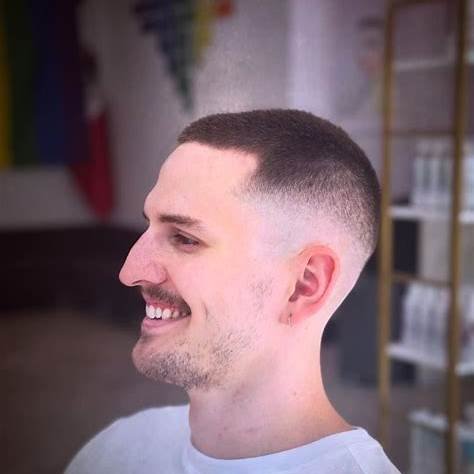
Textured crop (short). A #3–#4 on top with #2–#3 sides is the reliable fix. At that length the whorl is still there, but the hair is too short to stick up in a visible tuft, and point-cut texture breaks up the spiral pattern so it reads as texture rather than a swirl. See how to style a textured crop at home for the morning routine.
Buzz cut, #2–#3 all over. The nuclear option, and genuinely effective. Below about 1/4 inch, no growth pattern can misbehave. If your crown cowlick drives you crazy and you like the look anyway, this ends the fight permanently. Lengths are in clipper guard sizes explained.
Longer top with weight (the opposite play). If you don’t want to go short, grow the top to 3–4 inches and wear it in the direction the whorl already rotates. The hair’s own weight holds it down. What doesn’t work is the in-between: 1–2 inches on top is peak cowlick visibility.
Avoid: very short fades that leave a longer “island” right at the crown, and any style that requires the crown hair to lie in one flat direction. As crown hair thins with age, a hard contrast around the whorl also makes the scalp show more.
Best Haircuts for a Front (Hairline) Cowlick
A front cowlick usually wants to create its own part or push the fringe forward. Fighting it with a slick-back is a daily losing battle.
Forward-swept crop or French crop. Works with the forward push instead of against it. The fringe is cut to fall forward and slightly to the side the cowlick prefers, with texture so the natural split looks deliberate.
Crew cut with a natural part. Keep the top at #4–#6 length and let the part sit where the cowlick puts it — not where you wish it was. A part forced an inch away from the natural one will re-split by mid-morning.
Side part on the cowlick’s side. If your cowlick parts your hair on the left, a left-side part is nearly free styling: the hair is already going there. Moving the part to the cowlick’s side is the single easiest change most men with this pattern can make.
Avoid: slicked-back styles, center parts (unless your cowlick is centered), and long quiffs that must defy the growth direction to stand up — they’ll collapse into the split by noon.
Best Haircuts for a Nape Cowlick
Nape cowlicks grow upward against the downward flow, creating wings and flicks at the neckline.
Tapered or faded neckline. Taking the nape to a #1 or lower, tapered in, removes the length the cowlick needs to misbehave. A natural or tapered neckline handles a nape cowlick far better than a blocked (squared-off) one, because the upward growth ruins a sharp block line within days.
Short back with the blend starting higher. Ask your barber to start the blend a little higher at the back so the conflicting-growth zone is kept short.
Avoid: growing the back out “to cover it.” Longer nape hair with an upward cowlick flips outward — the opposite of cover.
The Daily Styling Routine That Actually Works
Product choice matters less than technique. This sequence takes about three minutes:
- Start with damp hair. Cowlicks reset when wet. Styling dry hair that slept wrong is fighting yesterday’s shape.
- Apply a small amount of pre-styler — a light sea salt spray or a pea-sized amount of matte clay worked through damp hair. Options are compared in best sea salt spray for men and best matte clay for short hair.
- Blow-dry in the direction of growth first. Aim the dryer so the air pushes the cowlick the way it naturally wants to lie, using your fingers or a brush to hold it there for 20–30 seconds. Heat is what re-sets the hair’s shape — this step does more than any product.
- Then shape the rest. Once the cowlick section is lying flat, direct the surrounding hair where you want it. If you must style slightly across the growth for your look, do it only after the section is warm and pliable, and expect a midday touch-up.
- Cool shot, then a fingertip of finishing product. A few seconds of cool air locks the shape. Finish with a small amount of clay or fiber for hold — matte finishes hide a cowlick better than shiny ones, which highlight every change of direction.
On non-wash mornings, re-wet just the cowlick area with wet fingers and repeat steps 3–5. That alone fixes most “bad cowlick days.”
What to Tell Your Barber
Say it plainly, before the cut starts:
- “I have a cowlick at my crown that swirls clockwise — please cut with it, not against it.”
- “I wear my part where the cowlick puts it, on the left.”
- “Keep the neckline tapered, not blocked — the hair at my nape grows up.”
Bring a photo of your hair on a good day rather than a celebrity photo — it shows the barber what your actual growth pattern can do. General scripts for asking for a cut are in how to ask your barber for a taper fade.
When to Just Grow It Out
Short isn’t always the answer. Grow past the cowlick if:
- Your cowlick is at the front and you prefer a longer, swept style — at 4+ inches, weight usually wins.
- You have a double crown and dislike the buzz/crop look; length plus styling in the rotation direction is the workable alternative.
- You’re willing to spend the 3 minutes with a dryer. Length only beats a cowlick if you set it with heat; air-dried long hair with a cowlick just has a bigger cowlick.
Expect an awkward phase around weeks 3–6 where the hair is too long to sit down and too short to weigh down. A hat and patience; it passes.
Common Mistakes
- Styling against the growth with stronger and stronger products. Hold level isn’t the problem; direction is. A firm product applied against a cowlick just makes a firmer tuft.
- Cutting the cowlick area shorter than everything around it. Barbers sometimes do this to “tame” it; on a crown whorl it makes the scalp show and the surrounding hair look uneven. Blend it, don’t scalp it.
- The mid-length trap. 1–2 inches at the crown is where whorls are most visible. Commit shorter or longer.
- Skipping the blow-dryer. It’s the one tool that temporarily overrides growth direction. Product alone doesn’t.
FAQ
Can you get rid of a cowlick permanently?
No. A cowlick is the angle of the follicles themselves, and no product or cut removes it. You can only choose cuts and routines that work with it. (It can shift slightly or become more visible as hair thins with age.)
Does a cowlick mean I’m going bald?
No. Almost everyone has at least one cowlick, including men with full heads of hair. A crown cowlick can look like thinning because the swirl exposes scalp, but the pattern itself is not hair loss.
What is the best haircut for a crown cowlick?
A short textured crop (#3–#4 on top) for most men — short enough that the whorl can’t stand up, textured enough that the spiral reads as texture. A #2–#3 buzz is the simplest permanent fix.
Should I part my hair with or against a cowlick?
With it. Part where the hair naturally splits. Moving the part even an inch against the growth means it will re-split during the day.
Why does my cowlick get worse as my hair grows?
Because length gives the misdirected section more leverage and visibility, up to a point. It typically looks worst at 1–2 inches, then improves again past 3–4 inches when the hair’s weight starts holding it down.