

Gray hair isn’t just dark hair in a different color. When hair loses its pigment, the strand itself changes: most men find it comes in coarser, wirier, and drier, and it often grows at slightly different angles than it used to. A haircut that worked at 30 can look unruly at 55 for exactly that reason — the hair changed, not the cut.
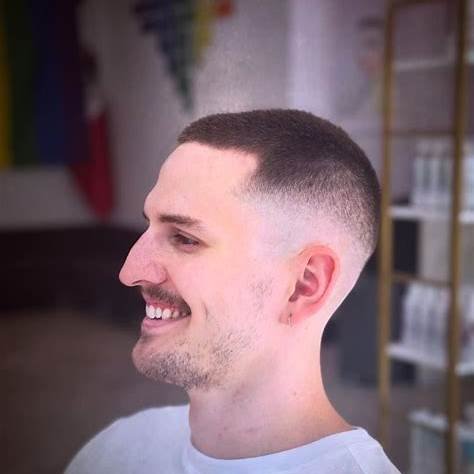
Short haircuts solve most of it. They’re also where gray looks its best: at short lengths, gray and salt-and-pepper hair reads as deliberate and sharp instead of tired. This guide covers why short cuts flatter gray, the specific styles that need the least daily effort, and how to handle the two real gray-hair problems — yellowing and wiry texture.
Why Gray Hair Behaves Differently
- Less oil. Gray follicles produce less sebum, so the hair is drier and can look dull or feel rough. Heavy products sit on top of it instead of absorbing.
- Coarser texture. Gray strands are often thicker in diameter and stiffer, which is why gray hair sticks out, resists lying flat, and shows every direction change (including cowlicks — see best short haircuts for men with cowlicks).
- More visible scalp contrast. White and silver hair against skin shows the scalp differently than dark hair does. Very tight fades can look patchier on gray hair than on dark hair at the same length — worth knowing before you ask for a skin fade.
The practical upshot: gray hair rewards simple shapes, matte finishes, and regular washing, and punishes fussy styling.
Why Short Cuts Flatter Gray Hair
Three reasons. First, proportion: short sides and a clean outline make gray look intentional — the difference between “silver” and “unkempt” is almost entirely the edges. Second, texture control: wiry growth is barely noticeable at #4 and below, because stiff strands need length to stick out at odd angles. Third, salt-and-pepper balance: at short lengths, dark and gray hairs mix evenly across the head, so patchy graying (gray temples, dark top, or the reverse) looks blended instead of blotchy.
The Best Low-Maintenance Short Styles for Gray Hair
The Buzz Cut (#2–#3 all over)
The zero-maintenance endpoint. One guard, whole head, no product, no styling — and gray shows at its most even, because every strand is the same length. A #3 (3/8 in) is the softer, more forgiving choice; a #2 (1/4 in) is sharper and shows more scalp and head shape. Many men with full gray find the #3 buzz reads “distinguished” where longer styles read “grown out.” Guard lengths are charted in clipper guard sizes explained. This is also the easiest cut to maintain yourself at home — the tools are covered in best clippers and trimmers for men’s short hair at home.
Upkeep: redo every 1–2 weeks at home, or every 3 weeks at a barber. No product needed. Ever.
The Textured Crop
#3–#5 on top with #2–#3 sides, cut with texture so the wiry top lies in short, broken pieces instead of standing up as one stiff mass. This is the best option if your gray is wiry: the texture works with the stiffness. A pea-sized amount of matte clay, pushed forward with your fingers, is the entire routine — 30 seconds, no mirror artistry. Full routine in how to style a textured crop at home.
Upkeep: barber every 3–4 weeks. Product: matte clay only, and even that’s optional on a fresh cut.
The Crew Cut
Short on the sides (#1–#2), graduated to #4–#6 on top with the front slightly longest. The graduation suits gray hair because it keeps the stiffest hair (usually the top) long enough to lie flat under its own weight while the sides stay tight. It grows out more gracefully than any other cut here — a crew cut at week five looks like a slightly longer crew cut, not a different haircut.
Upkeep: every 4–5 weeks. No daily styling required; a brush forward or to the side is it.
The Ivy League
The crew cut’s polished sibling: same short sides, but the top is left long enough (#6–#8, roughly 1–2 inches at the front) to brush to the side with a natural part. This is the pick for professional settings and for men whose gray is mostly at the temples — the side-swept top makes temple gray look like a deliberate style choice, which it now is.
Upkeep: every 4 weeks. One minute with a comb; a touch of light cream or a single spray of sea salt spray if the top is wiry (see best sea salt spray for men).
The Short Side Part
For salt-and-pepper men who still have density on top: #2–#3 sides, 1.5–2.5 inches on top worn with a defined side part. Gray along the part line and temples gives it a classic look that genuinely improves as you gray further. Keep the part where your hair naturally wants it — fighting a natural part is daily work, which defeats the purpose of this list.
Upkeep: every 3–4 weeks, because a part looks sloppy fastest as the sides grow.
Embracing Gray vs Blending It
Both are legitimate; they just need different cuts and expectations.
Embracing it is the lower-maintenance road and the one this site recommends for most men. Short cuts make full gray and salt-and-pepper look sharp, cost nothing to maintain, and never produce a regrowth line. If you go this route, the upkeep that matters is tone (below), not color.
Blending it means reducing the contrast rather than covering the gray: a barber-applied demi-permanent “camouflage” color that deposits tone on the gray hairs only and fades gradually over 3–4 weeks instead of growing out with a hard line. Short cuts help here too — less hair means less product, faster application, and less obvious regrowth. What to avoid on short hair: opaque permanent dye, especially in a shade darker than your natural color was. On a short cut the grow-out line is visible within two weeks, and dyed-dark short hair against gray roots looks harsher than the gray did.
The beard counts. A fully gray beard with dyed head hair (or the reverse) is the mismatch people actually notice. Whatever you decide, decide it for both.
Keeping Gray Looking Silver, Not Yellow
The most common gray-hair complaint isn’t the cut — it’s tone. White and gray hair yellows because the strand has no pigment to hide discoloration. Causes: sun exposure, chlorine, smoking, heat styling, and mineral/product buildup.
- Use a purple (silver) shampoo once a week. Purple neutralizes yellow tones on the color wheel. Lather, leave it 2–3 minutes, rinse. More often than weekly can leave a faint violet cast — once is enough.
- Clarify once or twice a month with a clarifying shampoo to remove the buildup that dulls gray, especially if you use product daily or have hard water.
- Rinse after swimming and don’t let chlorinated water dry in your hair; a pre-swim rinse with clean water reduces absorption.
- Go easy on heat. High dryer heat on its hottest setting can scorch-yellowing into white hair. Warm is fine.
Products and Finish: What Works on Gray
- Matte is the default. Matte clay and fiber give wiry gray hair control without shine, and shine on dry gray hair reads as greasy faster than on dark hair. Picks are compared in best matte clay for short hair and the broader best hair products for men’s short hairstyles.
- Condition, even with short hair. Because gray hair is drier, a light conditioner two or three times a week keeps a crop or crew from feeling like wire. You need very little at short lengths.
- Skip heavy oils and wet-look gels. They darken gray hair unevenly, make it look thinner, and can contribute to a yellow/grey cast as they build up.
- A drop of leave-in on longer tops only. If you wear the Ivy League or side part, a light leave-in conditioner tames the wiry top. Buzz and crop lengths don’t need it.
Maintenance Cadence
| Cut | Barber/home refresh | Daily effort | Product |
|---|---|---|---|
| Buzz (#2–#3) | Every 1–3 weeks | None | None |
| Textured crop | Every 3–4 weeks | ~30 seconds | Matte clay (optional) |
| Crew cut | Every 4–5 weeks | Brush only | None |
| Ivy League | Every 4 weeks | ~1 minute | Light cream or sea salt spray |
| Short side part | Every 3–4 weeks | 1–2 minutes | Light cream or matte paste |
However you wear it, edges decide whether gray looks sharp: a neckline and around-the-ear cleanup between cuts (at home with a trimmer, or a quick barber edge-up) buys an extra week from every haircut on this list.
FAQ
What is the best haircut for a man with gray hair?
For most men, a textured crop or a crew cut. Both keep wiry gray texture under control, need almost no daily styling, and make salt-and-pepper blending look even. If you want zero effort at all, a #3 buzz is the simplest good-looking option.
Does short hair make you look older or younger with gray?
Neither by itself — neatness does the work. Short, clean-edged cuts make gray look deliberate and tend to read younger than longer gray hair that’s grown out unevenly, which reads as not keeping up with it.
How do I stop my gray hair from looking yellow?
Purple shampoo once a week, a clarifying shampoo once or twice a month, rinse after swimming, and moderate dryer heat. Most yellowing is buildup and exposure, not the hair itself, so it usually improves within a few washes.
Should I dye my gray hair or embrace it?
If low maintenance is the priority, embrace it — short cuts make gray look sharp and there’s no regrowth line to chase. If you want to soften it, ask a barber about demi-permanent blending, which fades gradually, rather than permanent dye, which grows out with a visible line on short hair.
Why is my gray hair so wiry and hard to style?
Gray strands are typically coarser and the follicle produces less oil, so the hair is stiffer and drier. Shorter cuts, matte products, regular conditioner, and blow-drying on warm (not hot) for a few seconds to set direction handle most of it.