
A buzz cut is the simplest short haircut there is — and the easiest to get wrong. One guard, no blending, no styling: the result depends entirely on choosing the right length and executing it cleanly. Get the guard wrong and you expose a scalp you didn’t expect; get the edges wrong and the cheapest cut you can buy looks like a mistake.
This guide covers what “buzz cut” actually means, which guard number to choose, how buzz cuts suit different face shapes and hair types, what a barber charges versus doing it yourself, the grow-out plan, and the step-by-step DIY method. If you are comparing guard numbers in detail, our clipper guard sizes guide explains every guard from #0 to #8.
What “buzz cut” actually covers
Most men use “buzz cut” to mean one length all over, cut with clippers. Barbers use it more precisely:
- Guard numbers. The guard sets the length left on top — a #2 leaves 1/4 inch, a #4 leaves 1/2 inch. The number is the cut.
- Shape. A buzz can be uniform all over, or shorter on the sides and back with a slightly longer top. The uniform version is the classic; the tapered version is the more flattering one.
- Skin vs. scissor fade. The sides and back can be faded with clippers, or left at one guard length. A fade adds contrast; a single length is simpler and cheaper.
- The all-over cut. The strictest buzz is one guard everywhere, including the sides and back. It is the fastest cut to do and the easiest to maintain, but it is also the least forgiving of head shape.
Everything below assumes you are choosing between these versions — not debating whether a buzz is right for you in the first place. If you want curls or texture instead, our guide to short haircuts for curly hair covers cuts that keep the texture.
Choosing your guard number
Guard numbers are the whole decision. A #1 is stubble; a #8 is a short crop. The right choice depends on your scalp visibility, your hair density, and how much of your face shape you want to show.
| Guard | Length left | How it reads | Usually suits |
|---|---|---|---|
| #0 | 1/16 inch (1.5 mm) | Nearly shaved; scalp fully visible | Strong head shape; very low maintenance |
| #1 | 1/8 inch (3 mm) | Stubble; shadow of hair | Thick hair; men who want almost nothing |
| #2 | 1/4 inch (6 mm) | Short buzz; scalp faintly visible | The safe starting point for most men |
| #3 | 3/8 inch (10 mm) | Textured buzz; scalp mostly covered | Thinning hair; the most forgiving guard |
| #4 | 1/2 inch (13 mm) | Short crop; full coverage | Men who want a buzz that still reads as hair |
| #5–#8 | 5/8–1 inch (16–25 mm) | Very short cut, not a true buzz | Transitioning out of a buzz; thicker hair |
Three adjustments matter more than the table:
Hair density and color. Dark, dense hair shows scalp less at a given guard than fine, light hair. If your hair is fine or light, go one guard longer than you think — a #3 on fine hair reads like a #2 on thick hair.
Hair type. Straight hair lies flat and shows the scalp evenly; curly and wavy hair springs up and covers more, so the same guard looks fuller. Coarse hair holds a shape at shorter lengths; fine hair needs length to avoid looking sparse.
Thinning and hairlines. A buzz exposes thinning rather than hiding it — but a uniform short length reduces the contrast between thin and thick areas, which usually reads better than a longer style combed over. If your hairline is receding, a #2–#3 buzz with a clean edge is the standard answer; our guide to haircuts for receding hairlines covers the alternatives.
Face shape and head shape
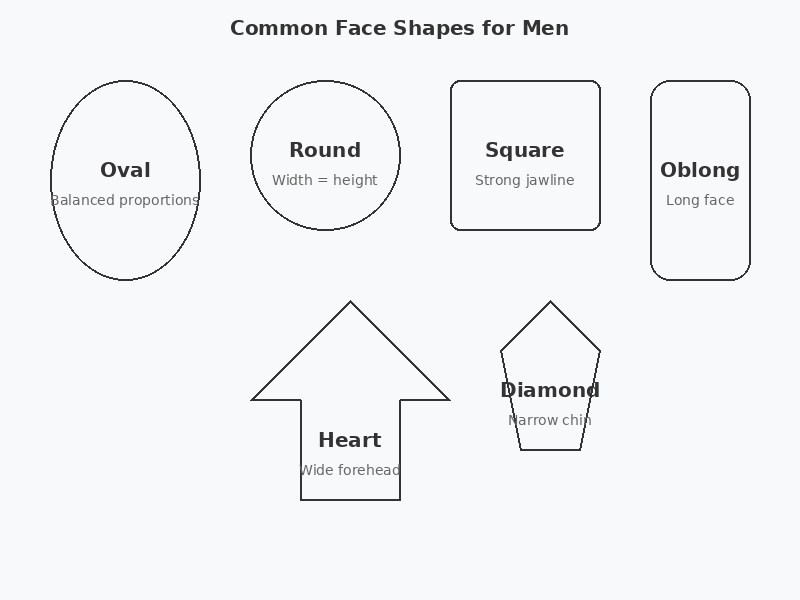
A buzz cut puts your head shape on display, so it is worth a quick check before you commit. The cut itself is simple; the question is whether your head suits it.
- Oval. The most flexible shape — almost any guard works. A uniform #2–#3 is the classic choice.
- Square. A buzz suits square faces well, especially with a slightly longer top (#3–#4) to soften the jawline.
- Round. A uniform buzz can make a round face look rounder. A tapered buzz — shorter sides, slightly longer top — adds height and balances the shape.
- Long or oblong. Keep the top short and avoid adding height. A #1–#2 all over works better than a tall, textured top.
- Head shape matters too. Bumps, flat spots, and scars are hidden by longer hair and exposed by a buzz. Run your hand over your head before committing — if you find surprises, choose a longer guard.
Our face-shape haircut guide covers the same logic for every short cut, not just buzz cuts.
Barber or DIY?
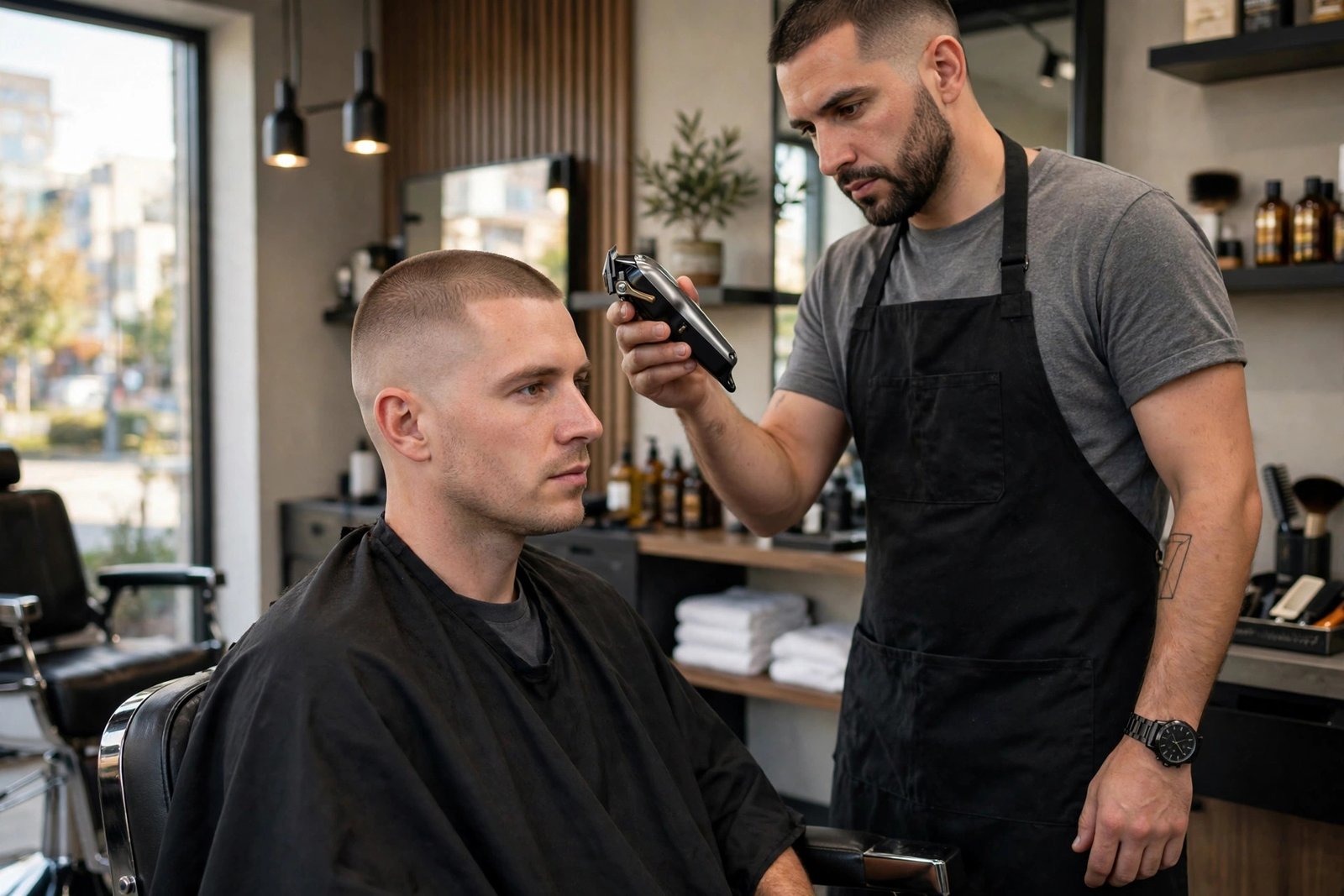
At the barber: a buzz is the cheapest cut you can buy — typically $10–$25 — and the hardest to get wrong, because there is nothing to blend. The barber’s value is the clean edges: a straight neckline, sharp lines around the ears, and a hairline that does not wander. If you want a fade on the sides, pay for the barber version; fading is the one part of a buzz that needs skill.
At home: a buzz is the one cut most men can do well themselves, and the savings add up fast — a $60–$100 clipper kit pays for itself in three or four cuts. The catch is the back of your head: you need a second mirror and a steady hand, and the first attempt always takes longer than you expect. Our clippers and trimmers guide covers which kit to buy and what actually matters in a home clipper.
DIY buzz, step by step
- Pick your guard and fit the taper lever. Start one guard longer than you think you want — you can always go shorter, but you cannot add hair back. Set the taper lever closed for the shortest cut with that guard.
- Cut the top against the grain. Work from front to back in overlapping passes, going against the direction the hair grows. Overlap each pass by half so you do not leave strips.
- Do the sides and back with the same guard. Work upward from the bottom, keeping the clipper flat against the head. Use a hand mirror for the back, or have someone check it.
- Clean the neckline and around the ears. Remove the guard and use the clipper’s bare blade (or a trimmer) to define the neckline and the edges around the ears. Work slowly — this is where mistakes show.
- Check for missed patches. Run your hand over your head in every direction and look in the mirror from all angles. Touch up any strips or patches with a second pass.
- Wash and check again. Rinse off the loose hair and look once more in good light. Stubble and loose hairs hide uneven spots until they are washed away.
How a buzz cut grows out (and the maintenance reality)
A buzz cut looks sharp for about two weeks, then the edges soften and the shape starts to go. The grow-out is honest but not invisible: the hair grows evenly, so there is no awkward stage, but the clean lines that made it look deliberate are the first thing to go.
The honest maintenance picture:
- Weeks 1–2: the cut looks as intended. The edges are sharp and the length is even.
- Weeks 3–4: the neckline blurs and the sides lose their edge. A quick cleanup of the neck and ears buys another week.
- Weeks 5–6: the buzz has become a short crop. It still looks fine, but it no longer reads as a buzz — time to re-cut or grow it into a textured crop.
Re-cutting every 3–4 weeks keeps a buzz looking intentional. If that cadence sounds like too much, a slightly longer guard (#3–#4) stretches the cycle by a week, or a textured crop gives you the same low-effort feel with a longer interval. The textured crop styling guide covers the grow-out option if you decide to let it grow.
Frequently asked questions
Does a buzz cut make your face look fatter?
It can, on round faces, because a uniform buzz removes the height that balances the shape. A tapered buzz with a slightly longer top is the fix — it adds height without adding maintenance.
Will a buzz cut make my hair grow back thicker?
No. A buzz does not change how hair grows — it only makes the hair that grows look thicker because the ends are blunt and uniform. The density, texture, and growth rate stay the same.
How often should I get a buzz cut?
Every 3–4 weeks to keep the edges sharp, or every 2 weeks if you have a fade on the sides. A quick neckline cleanup at home can stretch the cycle by a week.
Can I buzz my own hair with no experience?
Yes — a uniform buzz is the most forgiving DIY cut. Start with a longer guard than you think, work in overlapping passes, and use a second mirror for the back. The first attempt takes 30–45 minutes; after that, it is a 15-minute job.
Does a buzz cut suit a receding hairline?
Usually yes — a short, uniform length reduces the contrast between the hairline and the rest of the head, which makes recession less obvious than a longer style combed to cover it. A #2–#3 with a clean edge is the standard recommendation.
Is a buzz cut professional enough for work?
Yes, in almost every workplace. A clean, even buzz with sharp edges reads as deliberate and tidy. The version that looks unprofessional is an uneven DIY job with a ragged neckline — which is an execution problem, not a style problem.
Bottom line
A buzz cut is the lowest-maintenance haircut you can get, and the easiest to do yourself — but it is not a cut you can choose blindly. Pick the guard for your hair density and scalp visibility, check your head shape, keep the edges clean, and re-cut every 3–4 weeks. Do that, and the simplest cut there is will look like a deliberate choice rather than a surrender.