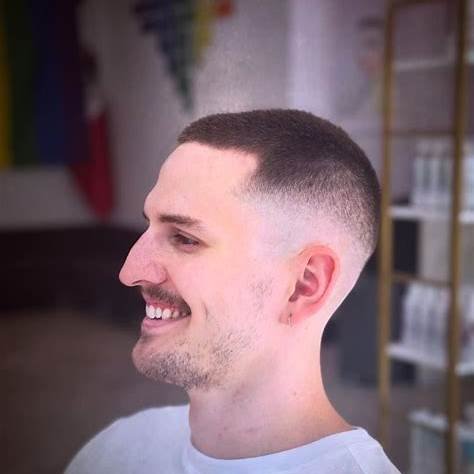

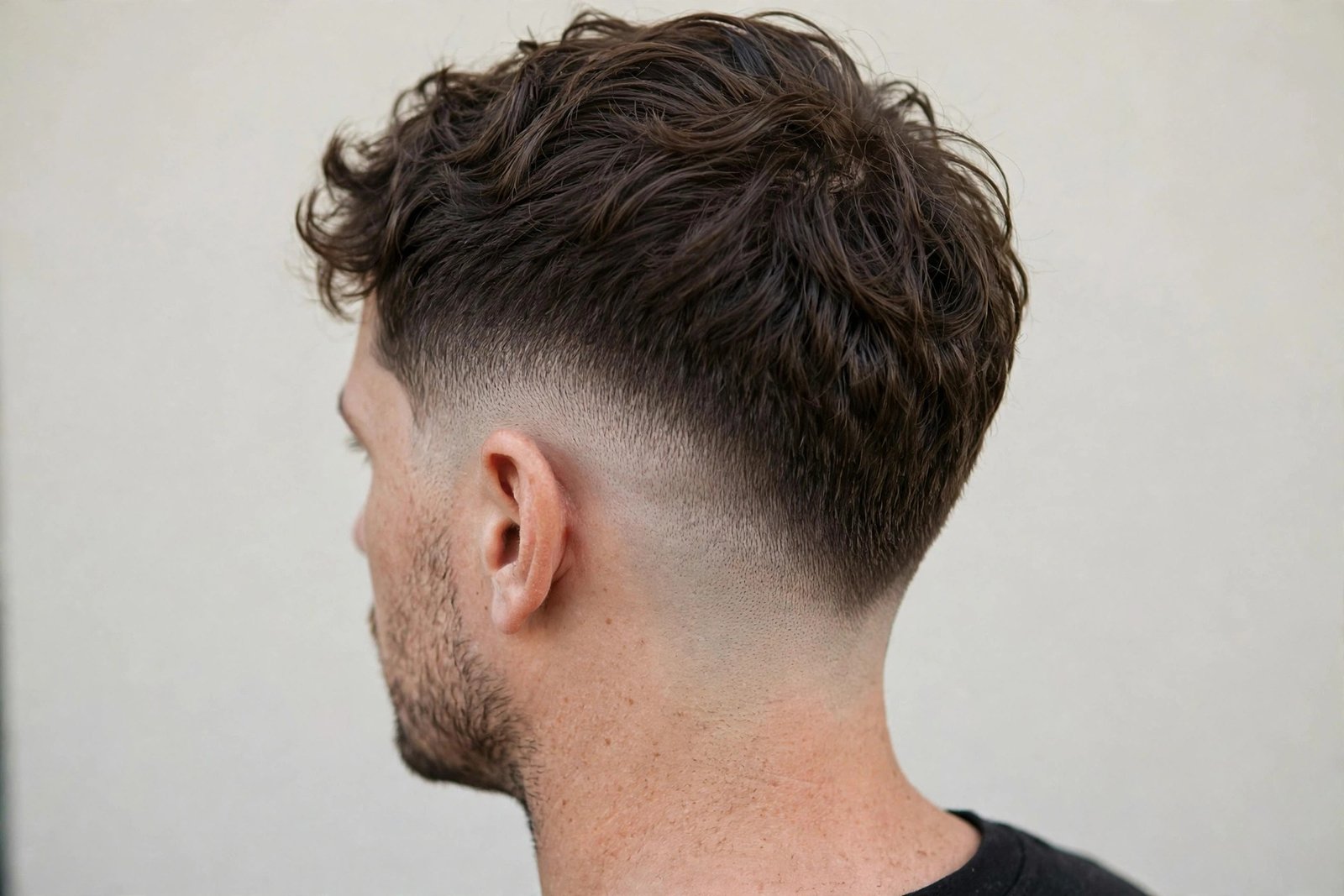
If you are considering a drop fade haircut, you have probably seen the curved line behind the ear in photos and wondered whether it is a completely different cut or just a variation on the fades you already know. It is a variation — and that is exactly why it works so well. A drop fade haircut takes a normal low, low mid, or mid fade and changes the shape of the fade line: instead of running in a straight line around the head, the fade arcs downward behind the ear and at the back, following the natural curve of the head. That small change makes the back and sides look cleaner, gives longer tops a better frame, and helps wavy and thick hair sit more naturally.
This guide explains the drop fade haircut in full: what it is, how low and mid versions differ, who it suits by face shape and hair type, the guard lengths involved, exactly what to say to your barber, how to style the top, and how often it needs refreshing. It also covers the mistakes that make a drop fade look wrong — most of them come from choosing a height that fights your hair type, not from the drop shape itself.
What is a drop fade haircut?
A drop fade haircut is defined by the path the fade takes around the head. In a regular fade, the shortest part of the blend sits at roughly the same height all the way around. In a drop fade, that line drops down behind the ear, so the fade sits lower at the back than it does at the temples. From the side, you can see the arc clearly: the fade dips in a curve, hugging the shape of the skull and the ear.
That curve is not decoration for its own sake. The back of the head is where most short haircuts look bulky first, especially on wavy and thick hair. By dropping the fade lower at the back, the barber removes weight exactly where the head curves away, keeps the neckline tight for longer, and avoids the straight horizontal line that can make the back of a fade look like a shelf once it starts growing out.
You can combine the drop shape with almost any fade height and any shortest length. A low drop fade to skin, a low mid drop fade starting at a number 0.5, and a mid drop fade are all common. The word drop describes the shape; low, mid, and skin describe the height and the shortest point. Keeping those two decisions separate is the key to asking for the right cut.
If you are still deciding between heights in general, our comparison of low fade vs mid fade explains how height changes contrast and upkeep before you add the drop shape on top of it.
Low drop fade vs mid drop fade vs low mid drop fade
Low drop fade — the subtle, natural version
A low drop fade keeps the blend low at the front, near the sideburns and just above the ears, then arcs down even lower behind the ear and at the nape. It is the most forgiving drop fade and the easiest to grow out.
Who it suits: Men who want a clean finish without a high-contrast look, longer tops, side parts, brushed-back styles, and anyone in a conservative workplace. It also suits long and narrow faces, because it does not add height or expose much of the sides high on the head.
Guard lengths: Skin, 0, or 0.5 at the lowest point around the ears and nape, through 1 and 2 in the blend, meeting scissor length or a 3 to 4 above. Nothing needs to climb high.
Grow-out: The softest of the drop fades. Because the line sits low, growth blurs it gradually rather than breaking it. Refresh every three weeks is realistic, and many men stretch to four.
Low mid drop fade — the balanced modern choice
A low mid drop fade starts low at the front, rises slightly toward the temples and the upper sides, then drops behind the ear in the signature arc. It is sharper than a low drop fade but stops well short of a full mid fade.
Our dedicated guide to the low mid fade haircut for men covers that height in detail, and the drop version uses the same heights — only the back line changes shape.
Who it suits: Most men, and especially wavy and thick hair that puffs at the back and temples. The drop removes that back bulk while the low mid height keeps definition at the front. Oval, square, and round faces all wear it well.
Guard lengths: Skin, 0, or 0.5 at the base, through 1 and 2, with a 3 to 4 or scissor blend into the top. If your hair is fine, start at 0.5 rather than skin so the sides keep a shadow and do not look thin under light.
Grow-out: Clean for about 10 to 14 days, then gradually softer. Refresh every two to three weeks.
Mid drop fade — sharper contrast with a curved back
A mid drop fade takes the blend up to around temple height at the front and sides, then drops behind the ear. The contrast is the look: a tight, structured side with a clean curved finish at the back, and the top sitting clearly on top of it.
Who it suits: Shorter tops — textured crops, short fringes, tight quiffs — and men who re-book every two weeks. It suits oval and square faces well. Round faces can wear it if the top keeps some lift; long faces should usually stay with the low or low mid versions to avoid adding visual length.
Guard lengths: Usually skin or 0 at the base, through 0.5, 1, and 2 in a more compressed blend, meeting a shorter top sooner than the low versions do.
Grow-out: The fastest to lose its edge. Plan on every two weeks if you want it to stay looking like a mid fade.
Who the drop fade haircut suits — by hair type
Wavy hair: One of the best matches for a drop fade. Wavy hair expands at the back corners and above the ears as it grows, and the drop arc removes length exactly along that expansion zone. Keep the top at one and a half to three inches so the wave has room to form — a wave needs length to complete its bend, and a top cut below about an inch will read as straight or fuzzy rather than wavy. Our guide to fade haircuts for wavy hair compares every fade height for this texture, and the broader best short haircuts for wavy hair guide covers the tops that pair with them.
Thick hair: The drop fade helps, but ask for debulking as well. The fade alone does not remove the weight sitting just above the fade line. Ask the barber to point-cut or lightly texture the transition zone and the top so the hair lies flatter instead of pushing out in a shelf above the arc.
Fine hair: Choose low or low mid heights and start the fade at 0.5 rather than skin. Fine hair shows the scalp under bright light, and a tight skin drop fade can make the sides look thinner than they are. A shadow fade keeps the shape without the exposure.
Straight hair: Works cleanly at any drop height. The risk is the opposite of wavy hair: a very precise arc can show steps as it grows, because straight hair does not blur the line. A slightly softer blend through the arc grows out more gracefully.
Curly hair: Keep the drop low and the top long enough for the curl pattern to sit down. A low drop fade with a longer curly top is a strong, natural combination; high drop fades with short curly tops tend to disconnect.
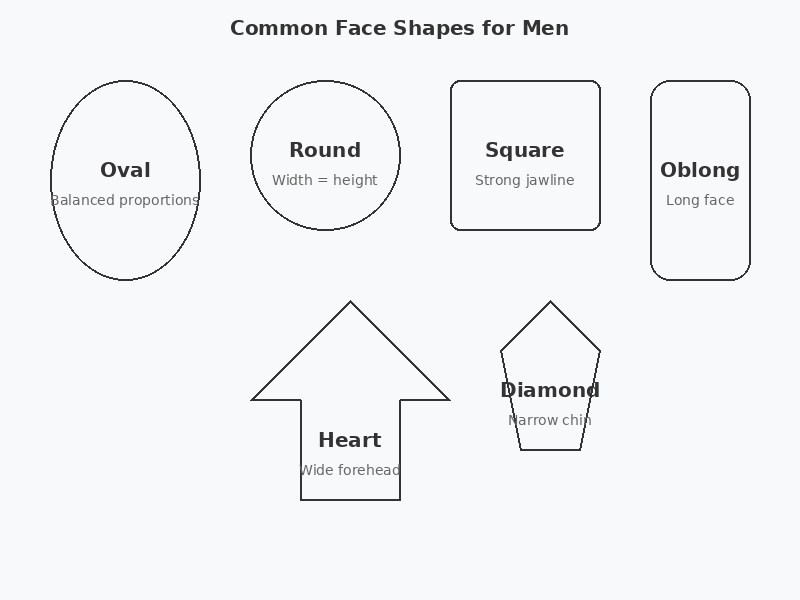
Who it suits — by face shape
Round faces: Low mid and mid drop fades, with some height or lift on top, add definition. Avoid very low fades with a flat, forward top, which can make the face look rounder.
Square faces: Low and low mid drop fades suit best. The softer arc avoids making the head look boxy, and the curved back line complements a strong jaw rather than competing with it.
Oval faces: Any drop height works. Choose on hair type and upkeep alone.
Long faces: Stay low. A low drop fade with a forward-worn or side-swept top keeps width low on the head and avoids adding length. Avoid mid and high drop fades with a tall quiff.
Heart-shaped faces: A low drop fade keeps some width at the jaw level and avoids narrowing the lower head further. Keep the top moderate rather than very short.
How to ask your barber for a drop fade haircut
Use this wording, filling in your height and shortest point:
“Can I get a low mid drop fade — skin at the bottom around the ears and neckline, blended through a 1 and a 2, and I want the fade line to drop down behind the ear and at the back rather than run straight around. Keep the top at about two inches, textured, and blend it softly into the fade with no hard disconnect.”
Then confirm four things before the clippers start:
- Height at the front. Low, low mid, or mid — point to where you want the blend to sit at the temple.
- Shortest point. Skin, 0, or 0.5. If you have fine hair or a sensitive scalp, say 0.5.
- The drop itself. Say explicitly that the line should arc down behind the ear. A barber who hears only fade may cut a straight line by habit.
- Top length and connection. State the top length in inches and whether you want a soft natural blend or a sharper contrast.
Bringing a photo helps, but choose one taken from the side or back — the drop is invisible from the front, and a front-only photo tells the barber nothing about the arc you want.
Guard lengths for a drop fade haircut: quick reference
- Low drop fade: Skin, 0, or 0.5 at the base, 1 and 2 through the blend, 3 to 4 or scissors above.
- Low mid drop fade: Skin, 0, or 0.5 at the base, 1 and 2 through a longer blend, 3 to 4 or scissors into the top.
- Mid drop fade: Skin or 0 at the base, 0.5, 1, and 2 in a tighter blend, meeting a shorter top.
- Skin drop fade at any height: Skin at the base, then 0.5, 1, and 2 — do not skip the 0.5 step, because that step is what stops the arc from looking stepped, especially on wavy hair.
For a full explanation of what each guard number means in millimetres and inches, see our guide to men’s hair clipper guard sizes.
How to style a drop fade haircut
The drop fade does the sides and back for you. Styling is about the top, and the top should be styled in the direction it was cut to fall.
For a textured, forward top: Work a pea-sized amount of matte product through dry or nearly dry hair, push the hair forward and slightly to one side, then pinch the ends to separate them. A matte pomade or clay gives hold without shine. Our guide to the best pomade for men’s short hair explains which finish suits which hair type, and the best hair products for men’s short hairstyles hub compares every product type side by side.
For wavy hair on top: Apply product to damp hair, shape the wave with your fingers rather than a brush, and let it dry in place. Brushing a wave out while it dries is the fastest way to create frizz and puff above the fade line.
For a side part or brushed-back top over a low drop fade: Use a small amount of product with a little shine, comb the part in while the hair is damp, and finish by smoothing the transition zone down with your palm so no shelf forms above the arc.
Daily upkeep between visits: The arc itself needs no home trimming — do not try to re-cut the drop line yourself, because a curved blend is the hardest line to reproduce without a barber’s view of the back of your head. What you can do is keep the neckline clean with a trimmer below the natural line, and keep the top’s product light so build-up does not make the transition look heavy.
How often does a drop fade need refreshing?
- Low drop fade: Every 3 weeks, stretchable to 4.
- Low mid drop fade: Every 2 to 3 weeks.
- Mid drop fade: Every 2 weeks.
- Skin versions at any height: Every 10 to 14 days if you want the skin finish to stay visible; after that the cut reads as a short shadow fade, which is a softer look rather than a failed one.
Wavy and thick hair usually needs the shorter end of each range, not because the fade line disappears, but because the hair above the arc expands and starts to overhang it.
Common drop fade mistakes to avoid
Asking for a drop fade without naming a height. Drop is a shape, not a height. Without low, low mid, or mid, you are leaving the most visible decision to chance.
Taking the top too short for your texture. This is the wavy-hair mistake in particular: the fade is correct, but the wave the cut was meant to show never forms.
A drop that drops too far. The arc should follow the head, not dive toward the neckline. An exaggerated drop looks like a mistake at the back and grows out unevenly.
Skipping the 0.5 guard on a skin drop fade. The jump from skin straight to a 1 is what creates visible steps in the arc.
Trying to maintain the arc at home. Clean the neckline if you like, but leave the curved blend to the barber.
Frequently asked questions
What is the difference between a drop fade and a regular fade?
The shape of the fade line. A regular fade sits at roughly the same height all the way around the head. A drop fade arcs downward behind the ear and at the back, following the curve of the head, which removes back bulk more effectively and keeps the neckline tighter for longer.
Is a drop fade the same as a burst fade?
No. A burst fade is a small, tight arc concentrated just around the ear, often paired with a mohawk or a longer back. A drop fade runs around the whole head like a normal fade — it simply drops lower at the back instead of running straight.
Does a drop fade suit wavy hair?
Yes — it is one of the best fades for wavy hair, because the arc removes length along the back and above-ear zones where wavy hair expands most. Keep the top at one and a half inches or longer so the wave can form, and ask for a soft blend into the top.
How long does a drop fade last?
A low drop fade looks clean for about three weeks, a low mid for two to three weeks, and a mid or skin drop fade for about two weeks. Wavy and thick hair usually needs the shorter end of each range.
What guard lengths are used for a drop fade?
Typically skin, 0, or 0.5 at the base, blending through 1 and 2, and meeting a 3 to 4 or scissor length into the top. Fine hair is usually better starting at 0.5 rather than skin.
Can I get a drop fade with a longer top?
Yes. A low drop fade pairs well with side parts, brushed-back tops, and longer textured styles, because the low arc frames a longer top without competing with it. Mid drop fades pair better with shorter tops.
The bottom line
A drop fade haircut is not a different haircut — it is a better-shaped version of the fade you were probably going to get anyway. Choose the height for your face shape and upkeep tolerance, choose the shortest point for your hair type, keep enough length on top for your texture to show, and say the word drop explicitly so the line arcs behind your ear. Get those four decisions right and the cut will look cleaner at the back, grow out more gracefully, and suit wavy and thick hair better than a straight-line fade at the same height.