
If you have been searching for a low mid fade haircut, you are probably stuck in the same place a lot of men get stuck: a low fade feels too subtle and grows out too soft, a mid fade feels a touch too high and too sharp for work or for your head shape, and nobody at the shop seems to use the same words for the cut in between. That in-between cut is real, it has a name, and once you know exactly where it sits and how to describe it, it is one of the easiest short haircuts to wear well.
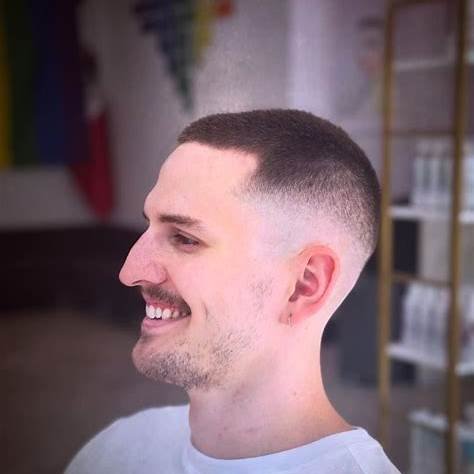
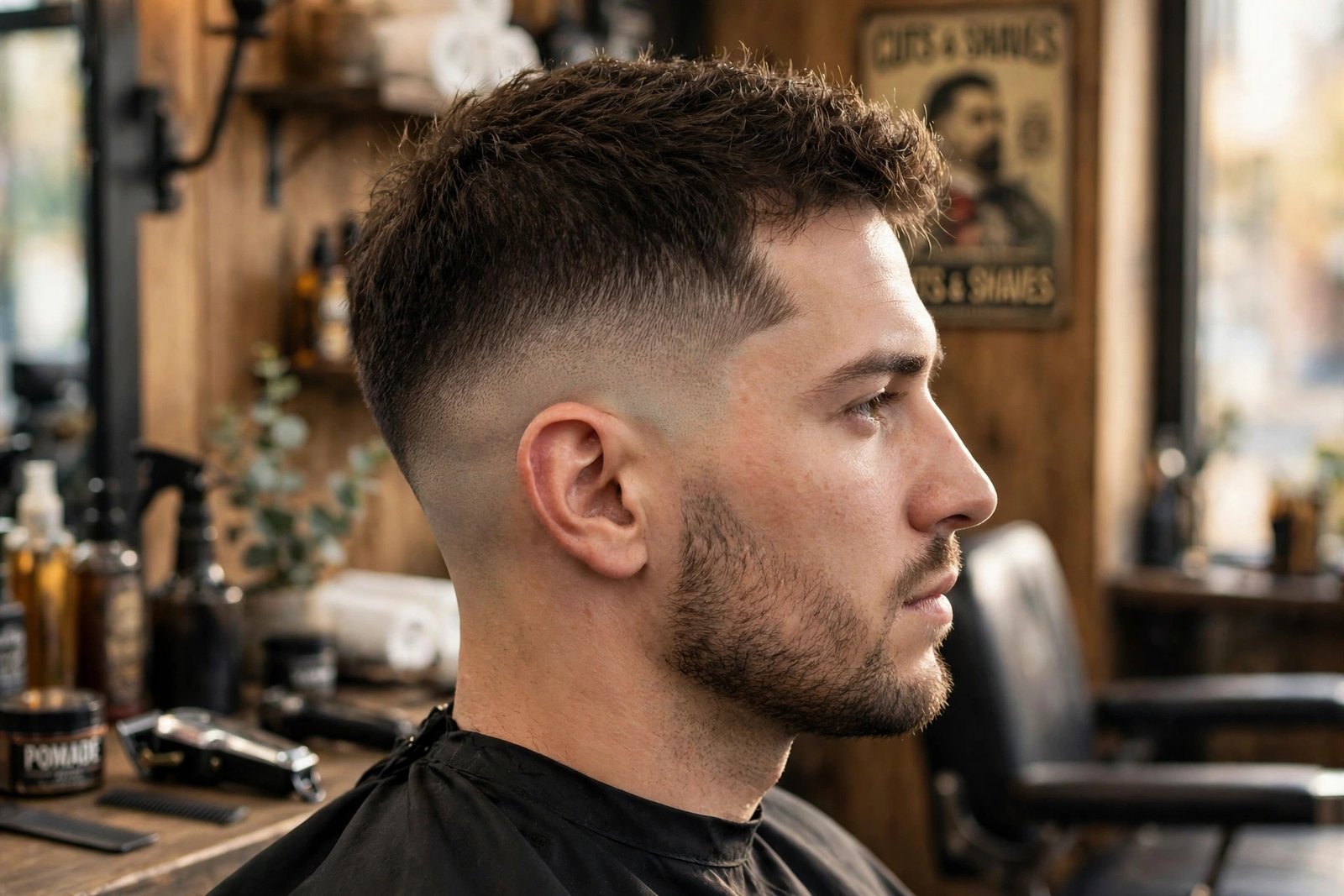
A low mid fade haircut is a fade that starts low around the ears and the back of the neck, then rises to a mid height at its highest point — roughly around the temples and the widest part of the back of the head, but never as high as a true mid fade’s line and never into high-fade territory. You get the clean, tight finish of a fade without the exposed scalp and hard contrast of a higher cut. This guide covers where the fade line actually sits, how it differs from a low fade and a mid fade in practical terms, who it suits by face shape and hair type, the guard lengths involved, the exact words to use with your barber, how to style the top, and how often it needs refreshing.
What a low mid fade haircut actually is
A fade is described by two things: how short it goes at its shortest point (skin, or a number 0, 0.5, or 1 guard), and how high the fade line climbs before it blends into the longer hair on top. The low mid fade is defined by that second part — the height.
The fade line starts low. Around the ears and at the nape, the shortest part sits low, close to where a classic low fade begins. This keeps length and shadow around the ears, which is why the cut looks more natural and less severe in the first week.
The fade line rises to mid at the back and temples. As the blend moves up and around the head, its highest point lands between a low and a mid fade — typically just below the point where a mid fade would sit, around temple height at the front corners and at the widest curve at the back. That rise is what gives the cut its shape: the silhouette stays tight and structured instead of round.
The blend is longer, not stretched thin. Because the low mid fade covers more vertical distance than a low fade but stops lower than a mid fade, the graduation tends to be smooth and shadowy rather than bright and high-contrast. Done well, there is no visible line — just a gradual change from skin or near-skin to the length on top.
Barbers do not all use the term “low mid” the same way. Some call it a “low to mid fade” or a “medium low fade” — those search terms and shop terms all point at the same idea: low at the start, mid at the top of the blend. Because the name alone can mean slightly different heights to different barbers, the asking section below gives you reference points on your own head to point to, which matter more than the label.
Low mid fade vs low fade vs mid fade
The fastest way to understand this cut is against its two neighbours. Our full comparison of the low fade vs mid fade covers those two in depth; here is where the low mid sits between them.
Against a low fade
A low fade keeps the whole blend down near the ears and neckline, so more of the sides keep visible length and the overall shape looks fuller and softer. A low mid fade starts in the same place but climbs higher at the back and temples, so it looks cleaner and more defined, shows more shape in the head, and stays looking intentional for a few days longer as it grows. Choose the low fade if you want the most conservative, natural finish; choose the low mid if a low fade has ever looked “not quite finished” or too round on you by week two.
Against a mid fade
A mid fade takes the blend up to around the temples and the middle of the back of the head all the way around, exposing more scalp and creating stronger contrast with the top. A low mid fade keeps the front and sides lower, so it reads as sharper than a low fade but more forgiving than a mid fade — less scalp show, a softer grow-out, and a better fit for offices and for men who do not want the fade to be the loudest part of the haircut. If a mid fade has ever felt a bit high or harsh on you in the first few days, the low mid is usually the correction.
Against a taper fade
A taper fade only fades the sideburns and the neckline, leaving the rest of the sides scissor-length. A low mid fade fades the full sides and back. If you are deciding between the two, our guide on how to ask your barber for a taper fade explains the taper’s asking language — but know that the low mid is the more structured, barbered look of the two, and the taper is the more natural one.
Who the low mid fade suits best
By face shape
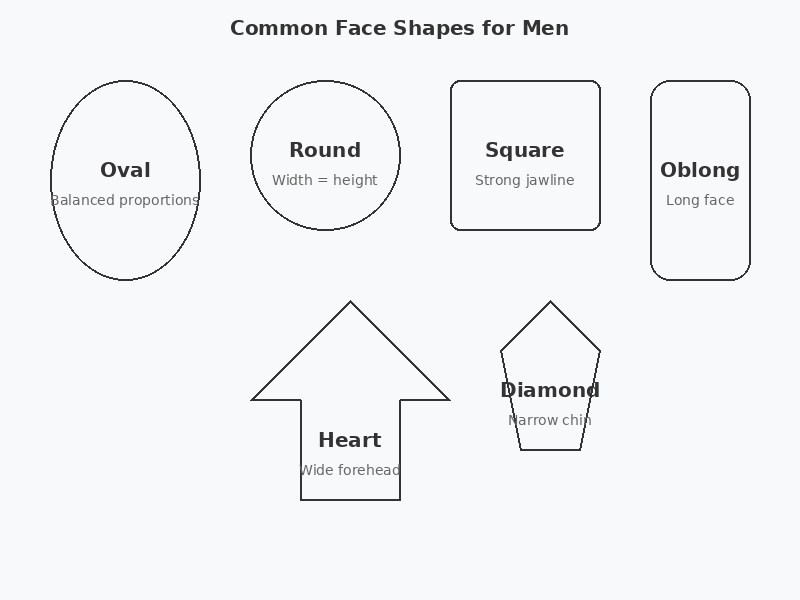
Round faces: This is one of the best fade heights for a round face. The rise at the back and temples adds definition and a sense of angles without the extreme contrast of a high fade, and keeping some length and height on top adds the vertical line a round face benefits from. Ask for the top to stay long enough to style up or forward with texture, not cropped flat.
Square faces: A strong jaw already provides the structure, so the low mid fade’s softer blend stops the cut from looking overly hard or boxy. It works especially well with a short side part or a textured top worn slightly messy rather than slicked tight.
Oval faces: Almost any fade height works, and the low mid is a safe, balanced default — clean without dominating the face. The decision can be made on hair type and upkeep instead.
Long or oblong faces: Keep the top shorter and avoid adding height. A low mid fade is preferable to a mid or high fade here because it keeps more shadow on the sides, which stops the head from looking even longer. A forward-worn crop or fringe on top pairs well.
Heart-shaped faces: The lower start around the ears keeps some width low on the head, balancing a wider forehead. Avoid pairing it with a very tall quiff; a flatter textured top keeps the proportions right.
By hair type
Straight hair: Shows every step of a blend, so the longer graduation of a low mid fade is forgiving — small imperfections are less visible than in a tight low fade. Straight hair on top can be worn as a crop, a short quiff, or a side part.
Wavy hair: An excellent match. The fade removes the puff-prone sides where waves expand first, while the top keeps enough length for the wave to show. If your hair is wavy, our guide to the best short haircuts for wavy hair covers the top lengths that let the wave sit properly above a fade like this one.
Curly hair: The low mid fade keeps the sides controlled without taking the blend so high that the curl on top looks disconnected. Ask the barber to blend into the curl rather than forcing a straight line — the transition should follow the curl’s natural weight.
Thick hair: The rise to mid height removes more bulk at the back and temples than a low fade does, which is exactly where thick hair pushes out. Ask for weight removal through the transition zone, not just a fade line.
Fine or thin hair: A skin-tight high fade can make fine hair look thinner by contrast. The low mid fade’s lower, shadowier blend is safer: ask for the shortest point to be a number 0.5 or 1 rather than skin if density is a concern, so the sides keep a shadow that supports the top.
Receding hairlines: The lower fade height keeps the focus off the temples compared with a mid or high fade, which exposes the recession more. Pair it with a forward fringe or a short textured top rather than pushing the front back.
Guard lengths: what to expect
Guard numbers describe the shortest lengths in the fade and the length left on top. Exact numbers vary by head shape, but a typical low mid fade haircut is built like this:
- Shortest point: skin, number 0, or number 0.5 (about 1.5 mm) at the ears and nape — your choice, based on how sharp you want the finish.
- Through the blend: a gradual climb through number 1 (3 mm) and number 2 (6 mm) as the fade rises toward its mid-height point.
- Transition to the top: number 3 to number 4 (10–13 mm) or scissor work where the fade meets the top length.
- On top: anywhere from a number 5–8 guard (16–25 mm) for a crew-length top, to one to three inches of scissor-cut length for a crop, quiff, or side part.
If you are unsure about the shortest point, start with a number 0.5 rather than skin. It still reads as a clean fade, grows out more softly, and you can always go shorter next visit once you have seen how the height suits you.
How to ask your barber for a low mid fade
Barber communication is where this cut is won or lost, because the name is not fully standardised. Use this order:
- Name it, then describe the height. Say: “A low mid fade — low around the ears and neckline, rising to about mid at the back and temples, but not as high as a full mid fade.” Then point: touch just above your ear for the low start, and the widest part of the back of your head for the highest point.
- Say the shortest length. “Skin at the bottom” or “start with a zero point five” — pick one and say it clearly.
- Describe the top separately. Length first (“about two inches on top”), then how you wear it (“textured and forward” or “long enough to part on the side”). The fade and the top are two separate decisions; do not let one description cover both.
- Say what you want at the edges. Natural or lined-up hairline, and a natural, tapered, or blocked neckline. A tapered neckline grows out the most gracefully with this fade.
- Bring a photo of the height, not just the style. Two photos are ideal: one showing the fade height from the side, one showing the top you want. Photos settle the “low mid” definition faster than any wording.
What to say if it comes out wrong: If the fade is too low, the fix is simple — ask the barber to take the blend up a little at the back and temples; that is a two-minute adjustment while you are in the chair. If it is too high, it cannot be put back — which is why it is worth asking the barber to start low and check with you before raising it. A good barber will not mind; that check is normal for a first low mid.
Styling the top: three ways that work with a low mid fade
The fade handles the sides; your daily effort goes on the top. Keep the routine simple and matched to your top length.
Textured crop (top: 1–2 inches, worn forward)
Dry the hair forward and slightly down, then work a fingernail-sized amount of matte paste or clay through with fingertips, raking forward and pinching the fringe to break it up. This is the lowest-effort pairing and the most forgiving as the fade grows out.
Short quiff or textured top (top: 2–3 inches)
Blow-dry the front up and slightly back, lifting at the roots, then finish with a small amount of paste at the front third only. The fade’s structure does the rest. Avoid heavy, shiny product through the whole top — it makes the contrast with the clean fade look greasy rather than sharp.
Short side part (top: about 2 inches)
Part the hair damp, dry along the part, and use a light pomade or cream to keep the surface lying together. If pomade is your preference, our guide to the best pomade for men’s short hair explains which finishes suit a faded side part and which will weigh a shorter top down.
Whichever style you choose, apply product back first, sides second, front last, and use less than you think — the fade already gives the cut its shape, so product is only finishing the top.
Upkeep: how often a low mid fade needs a refresh
A low mid fade sits in the middle for upkeep as well as height:
- Sharpest window: the first 10 to 14 days, when the blend and edges are at their cleanest.
- Standard refresh: every two to three weeks for most men. The lower start means the grow-out looks softer than a mid or high fade at the same age, so three weeks is realistic if your hair grows at an average rate.
- Fast growers and skin finishes: every two weeks. A skin fade shows regrowth sooner than a 0.5 or 1 finish at any height.
- Between visits: a neckline tidy and a careful edge clean-up at home can stretch a cut by several days. Our routine for how to maintain a fade between barber visits covers the safe two-week touch-up steps — and what not to touch, which includes the blend itself. Never try to re-fade the graduation at home; one uneven pass is harder for your barber to fix than a grown-out fade is to refresh.
Budget-wise, expect the same price as any fade at your shop — the low mid is not a premium cut, it is a height specification. If a shop charges by the cut rather than the style, it should cost exactly what a low or mid fade costs there.
Common mistakes to avoid
Asking for the name only. “Low mid” means different heights in different shops. Always add the pointing description of where it starts and where it peaks.
Going skin-short on top of fine hair without discussing it. The contrast can exaggerate thinness. A 0.5 or 1 at the shortest point keeps a shadow that looks fuller.
Pairing it with too much height on a long face. The fade is not the problem — the tall top is. Keep the top flat and forward if your face is long.
Judging it on day one alone. Fades settle. The low mid in particular looks its best from day three to day fourteen, once the shortest parts soften slightly. Judge the height at your second visit decision, not in the car park after the first.
Skipping the neckline decision. A blocked neckline shows a hard regrowth line within days against a soft fade. A tapered neckline matches this cut’s blended character and grows out invisibly.
Frequently asked questions
What is the difference between a low fade and a low mid fade?
A low fade keeps the entire blend low, around the ears and neckline. A low mid fade starts in the same low position but its blend rises higher — to about mid height at the back of the head and temples. The result is cleaner and more defined than a low fade, with a slightly longer time before it looks grown out.
Is a low mid fade the same as a medium low fade?
Yes, in most shops the two terms describe the same cut: low at the ears and nape, rising to a mid height at its peak. Because neither term is perfectly standardised, describe the start and peak points to your barber rather than relying on the name alone.
How long does a low mid fade last?
It looks sharpest for about two weeks and stays presentable for around three weeks for most men, thanks to its soft grow-out. A skin finish needs refreshing closer to every two weeks; a number 0.5 or 1 finish stretches more comfortably to three.
What guard numbers are used in a low mid fade?
Typically skin, 0, or 0.5 at the shortest point, blending through a number 1 and 2 as it rises, into a number 3 or 4 or scissor work at the top. The top itself is whatever length your chosen style needs — from a number 5 guard for a crew length to two or three inches for a quiff or side part.
Does a low mid fade suit wavy or curly hair?
Yes — it is one of the better fade heights for textured hair, because it removes the sides where waves and curls puff out first while keeping the blend low enough that the textured top does not look disconnected. Ask your barber to blend with the curl’s weight rather than against it.
Should I get a low mid fade or a mid fade?
Choose the low mid if you want a cleaner finish than a low fade but a softer, more forgiving look than a mid fade — for example for a conservative workplace, a round or long face, or finer hair. Choose the mid fade if you want stronger contrast, more scalp show, and do not mind a slightly sharper grow-out line and more frequent refreshes.
The bottom line
The low mid fade haircut exists because the space between a low fade and a mid fade is exactly where a lot of men actually want to be: clean and structured, but not severe. Start low around the ears, rise to about mid at the back and temples, keep the blend long and shadowy, and match the top to your face shape — forward and textured for most men, flat for long faces, lifted for round ones. Describe the height with your hands as well as the name, start with a 0.5 if you are unsure about skin, and plan on a refresh every two to three weeks. Get those few decisions right and this is one of the easiest short haircuts to live with.