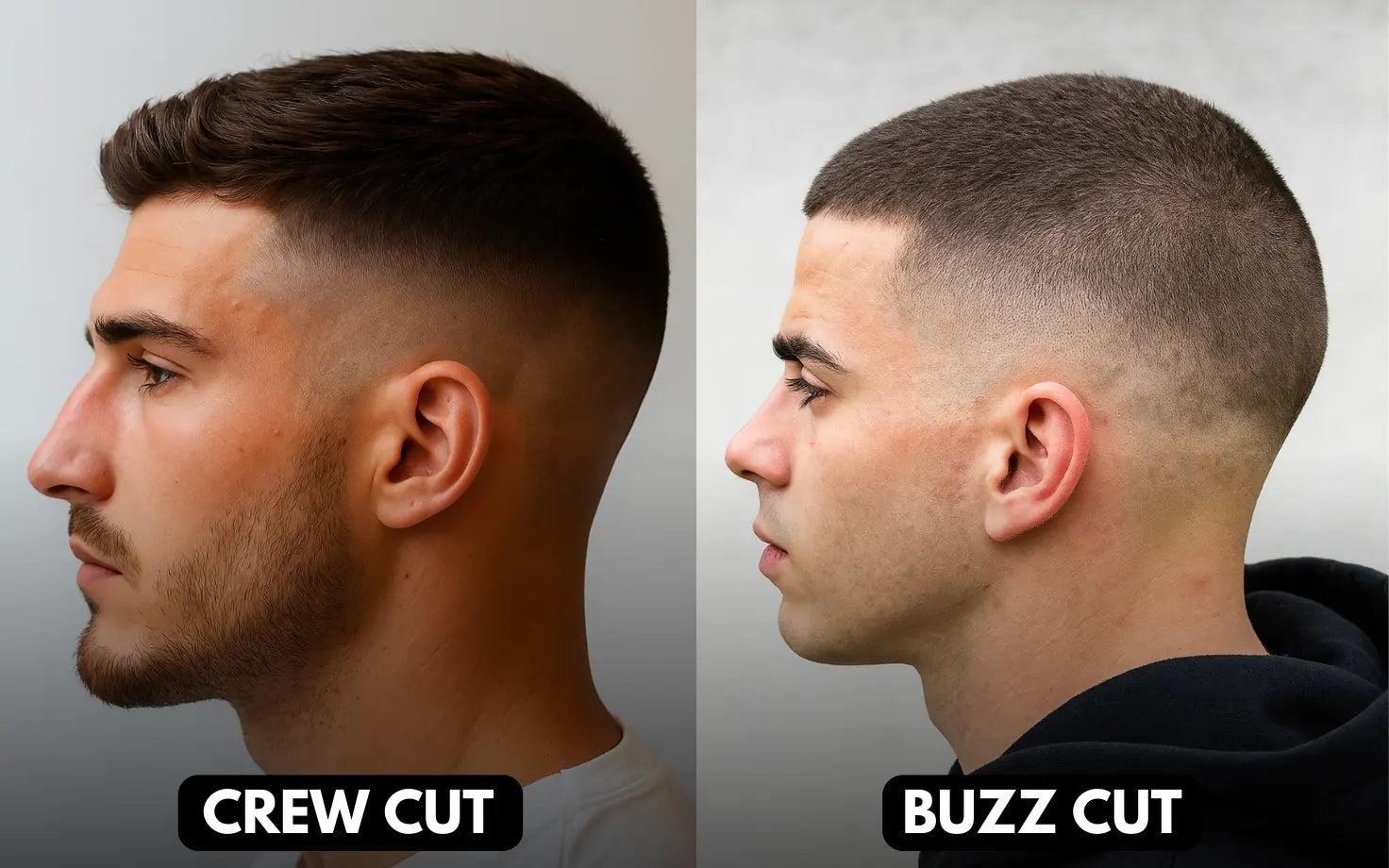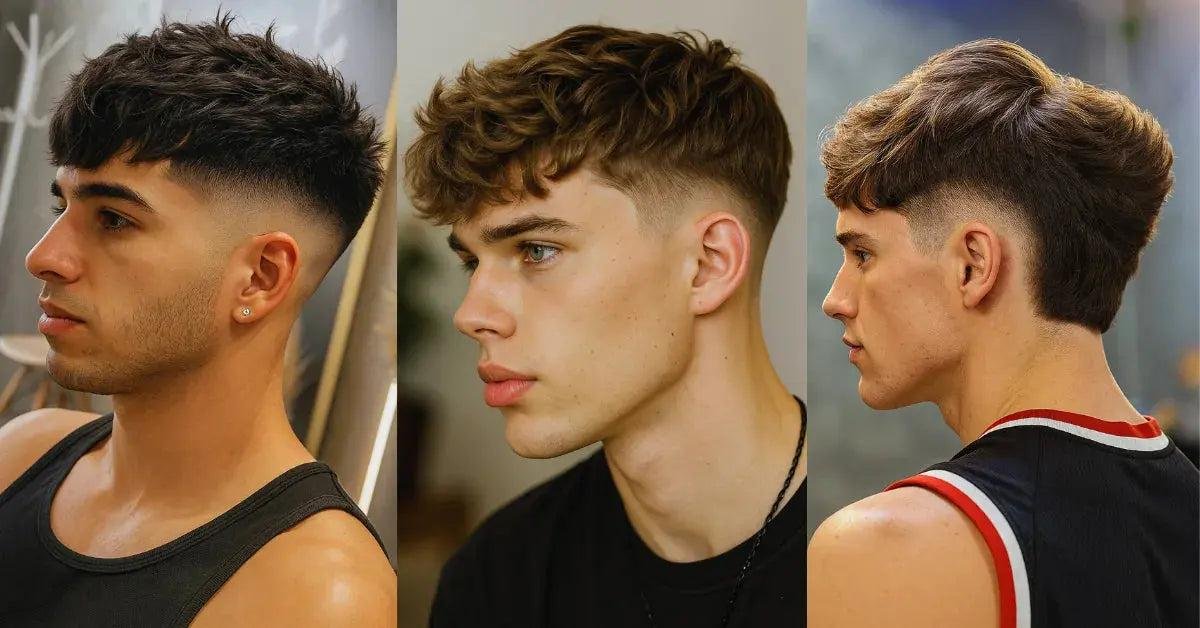

Choosing the best shampoo for men’s short hair sounds like it should be simple — the hair is short, so how much can the shampoo matter? More than most men expect. Short hair sits close to the scalp, which means scalp oil reaches the ends within a day instead of travelling down a long shaft over several days. Styling product sits close to the scalp too, so pomade, clay, and paste build up exactly where your skin is. And if you wear a fade, your scalp itself is part of the look: dry flakes, redness, or a greasy shine on a skin fade are visible in a way they never are under longer hair. The shampoo that keeps a long style healthy is not automatically the one that keeps a short cut looking clean.
This guide explains how to choose the best shampoo for men’s short hair for your actual hair type and scalp, how often short hair and fades really need washing, which ingredients do the work and which label claims are just marketing, what the price bands actually buy you, and the correct way to wash — because technique matters more on short hair than most men realise. It finishes with the common washing mistakes that make short hair look dull, flat, or flaky even when the cut itself is good.
Why short hair needs different shampoo thinking
Three things change when hair is short, and each one changes what you should buy.
Oil travels fast. Sebum from the scalp coats short hair quickly because there is simply less hair for it to spread across. That is why a buzz cut or a short crop can look greasy by the evening of wash day while a longer style looks fine for three days. Short hair generally needs a cleanser that removes oil properly — a very gentle, barely-cleansing formula designed for long, fragile hair often leaves short hair looking flat and dirty by midday.
Product build-up sits on the scalp. If you style daily with pomade, clay, wax, or paste, residue does not just coat the hair — it collects at the roots and on the skin. Over a week or two that build-up can make hair look dull, feel heavy, and stop responding to styling product. Our hub guide to the best hair products for men’s short hairstyles compares every styling category, and the stronger the hold you use from that list, the more seriously you need to take washing it out.
The scalp is on display. A skin fade, a low mid fade, or a short buzz shows a large area of scalp. Flakes show. Dryness shows. So does an oily sheen under bright light. For faded styles, scalp condition is not a background detail — it is part of the haircut’s finish, which is why the fade-focused sections below treat scalp care as seriously as cleansing.
The best shampoo for men’s short hair: what it actually has to do
Whatever your hair type, the best shampoo for men’s short hair has to do three jobs well, and a good buying decision is mostly about which of the three matters most for you.
- Cleanse the scalp, not just the hair. On short hair the scalp is the main event. A good shampoo lifts oil, sweat, and product residue from the skin without leaving the skin tight and stripped. If your scalp feels squeaky and itchy after washing, the cleanser is too harsh for daily use, however clean the hair itself looks.
- Leave the hair in a state you can style. Short hair is styled from the roots. Shampoo that leaves hair coated and slippery makes matte products grip poorly; shampoo that leaves it rough and parched makes it puff and look frizzy, especially on wavy and thick hair. The right finish depends on your type, covered next.
- Match your wash frequency. A man who washes daily after the gym needs a milder cleanser than a man who washes every third day and needs each wash to reset a build-up of product. Frequency and formula are one decision, not two.
How to choose by hair type
Oily scalp and straight hair
If your hair looks greasy within 24 hours and lies flat, choose a straightforward daily or clarifying-leaning shampoo with a proper cleansing base and little added conditioning weight. Straight hair shows oil fastest because there are no bends in the strand to slow the oil down. Wash daily or every other day without guilt — for genuinely oily scalps, frequent washing with a balanced formula is better than infrequent washing with a harsh one. Skip heavy 2-in-1 formulas as your only cleanser if flatness is your complaint; the conditioning agents that make them feel smooth are often what weighs short straight hair down.
Wavy hair
Wavy hair is the balancing act: the scalp gets oily while the waves themselves dry out and frizz if they are over-washed. Choose a balanced shampoo — real cleansing power, but not a stripping clarifying formula for everyday use — and wash every two to three days for most men. On non-wash days, rinsing with water alone and reshaping the wave with your fingers is usually enough. The cut matters as much as the cleanser here: our guide to the best short haircuts for wavy hair covers the lengths that let a wave form, and our routine guide on how to style wavy short hair shows where wash day fits into the full weekly system.
Thick and coarse hair
Thick hair traps product and sheds skin cells under a dense canopy, so the scalp often needs more cleansing attention than the hair does. Choose a thorough cleanser and spend longer massaging the scalp than you think you need — with dense hair, a 20-second wash often never really reaches the skin. A clarifying wash every one to two weeks helps if you use firm clay or wax daily, because dense hair holds residue longer. If your hair is coarse as well as thick, follow with a small amount of conditioner on the top length only; coarse strands are the ones that genuinely benefit from it even at short lengths.
Fine and thin hair
Fine hair is the easiest to weigh down and the fastest to look dirty, because thin strands clump together when oil coats them, showing scalp between the clumps. Choose a lightweight, volumising-leaning shampoo and avoid heavy conditioning formulas, oils, and rich 2-in-1 products as your daily driver. Our guide to the best short haircuts for men with fine hair makes the same point from the cutting side: with fine hair, almost everything is about avoiding weight, and shampoo is where that starts. Wash as often as the hair looks like it needs it — for fine hair that is often daily, and a gentle daily formula beats a harsh twice-weekly scrub.
Curly hair
Short curly hair dries out faster than any other type because the curl pattern slows oil travelling down the strand. Choose a gentler, moisturising-leaning shampoo, wash two to three times a week rather than daily, and do not skip conditioner — on curly hair it is not optional polish, it is what lets the curl sit down instead of frizzing. On the days between washes, water alone refreshes most short curls.
Dry, flaky scalp and dandruff
Flakes on a fade are the most visible scalp problem in short hair, and the fix starts with using the right category of product. If you have persistent flaking, itching, and yellowish or white flakes that keep coming back, look for a dedicated anti-dandruff shampoo with a recognised active ingredient — zinc pyrithione, ketoconazole, selenium sulfide, or salicylic acid are the actives most commonly listed on labels — and follow the label directions, which usually means leaving the lather on the scalp for a few minutes before rinsing and using it two to three times a week at first. Owner feedback on these products consistently makes the same point: they work when used as directed over several weeks, and disappoint when used once like a normal shampoo. A few cautions in plain terms: dry scalp from over-washing or harsh products produces small, dry flakes and usually improves with a gentler routine, while dandruff that does not respond after several weeks of correct use, or any scalp that is red, sore, or weeping, is a job for a doctor or dermatologist rather than another bottle.
Gray hair
Gray hair is often coarser and drier than the hair it replaced, and it can pick up a yellowish tint from product build-up and minerals. A gentle moisturising shampoo suits most gray hair, and a purple-toned shampoo used occasionally — once a week or less — is the standard way owners counteract yellowing, because the violet pigment neutralises yellow tones. Do not use a toning shampoo daily; overuse can leave a dull violet cast.
Sensitive scalp
If shampoos regularly leave your scalp itchy, tight, or red, choose a fragrance-light or fragrance-free formula with a short ingredient list, and change one thing at a time so you can tell what helped. Sensitivity is individual: the ingredient that bothers one scalp is fine for another, which is why spec and ingredient lists matter more here than any recommendation.
Ingredients that matter — and claims that do not
You do not need a chemistry degree to buy shampoo well. You need to know which parts of the label describe the cleaning system and which parts are decoration.
The cleansing base. Most shampoos clean with surfactants. Traditional formulas use sulfates such as sodium lauryl sulfate or sodium laureth sulfate: strong, effective cleansers that suit oily scalps, heavy product users, and infrequent washers. Sulfate-free formulas use gentler surfactants: they clean less aggressively, which suits dry, curly, coarse, and frequently washed hair. Neither is automatically better. The honest rule is to match strength to need — a daily washer with dry wavy hair and a twice-a-week washer with an oily scalp and a clay habit should not be using the same bottle.
Anti-dandruff actives. If a shampoo claims to fight dandruff, check that it actually lists an active ingredient and its purpose on the label. A shampoo that merely smells medicinal or contains a trace of tea tree oil is not the same category of product.
Conditioning agents. Silicones and conditioning polymers make hair feel smooth, which is pleasant on longer hair but often unnecessary weight on hair under two inches. On short hair, light conditioning in the shampoo is fine for dry and coarse types and a liability for fine and oily types.
Claims to treat with suspicion. “Thickening” shampoos do not grow hair or change strand diameter permanently — at best they coat strands or clean so well that hair looks fuller for the day. “Detox” is a marketing word for a clarifying wash. And no shampoo repairs split ends; at short lengths you cut ends off every few weeks anyway, which is one of short hair’s real advantages.
Do you need conditioner with short hair?
Short answer: it depends on length and type, and the fade changes the question. Hair on the faded sides needs nothing — there is barely any hair there. Conditioner is for the top, and only if the top is long enough and dry enough to benefit.
- Buzz cuts and tops under about half an inch: skip conditioner entirely. There is not enough hair to condition, and product on the scalp just adds grease.
- Tops of one to three inches, straight or fine: usually skip it, or use a very light conditioner once a week if the hair feels dry. Weight is the enemy.
- Wavy, curly, thick, coarse, or gray tops: yes, a small amount worked through the top only, kept off the scalp, makes a visible difference to frizz and softness.
- If you use a 2-in-1: treat it as a shampoo with light conditioning built in. It suits short, low-maintenance styles well, but heavy product users and flaky scalps usually do better with a dedicated shampoo.
How often should you wash short hair?
There is no single correct number, but there is a correct way to find yours: wash when the scalp is oily, itchy, or product-loaded — not by a fixed rule copied from someone with different hair.
- Oily scalp, fine hair, daily styling product, daily workouts: daily washing with a gentle-to-balanced formula is normal and fine.
- Most short hair, balanced scalp: every other day, or three to four times a week.
- Wavy hair: every two to three days, with water-only rinses between.
- Curly, coarse, or dry hair: two to three times a week.
- Skin fades: the hair is minimal, but the scalp still produces oil and sheds skin — washing on your normal schedule keeps the fade looking sharp, and our guide to how to maintain a fade between barber visits covers the rest of the between-visit routine.
One adjustment matters more than the headline number: if you increase wash frequency, step the formula gentler; if you decrease it, step the formula stronger. Frequency and strength should always move in opposite directions.
How to wash short hair properly: step by step
Technique is where short hair is won and lost, because there is so little hair that almost all of the work is scalp work.
- Wet thoroughly. Short hair wets fast, but the scalp needs to be fully wet for shampoo to spread and lift oil. Lukewarm water is fine; very hot water dries the scalp.
- Use less than you think. A coin-sized amount is enough for almost any short cut. More shampoo does not mean cleaner hair — it means more rinsing and more dryness.
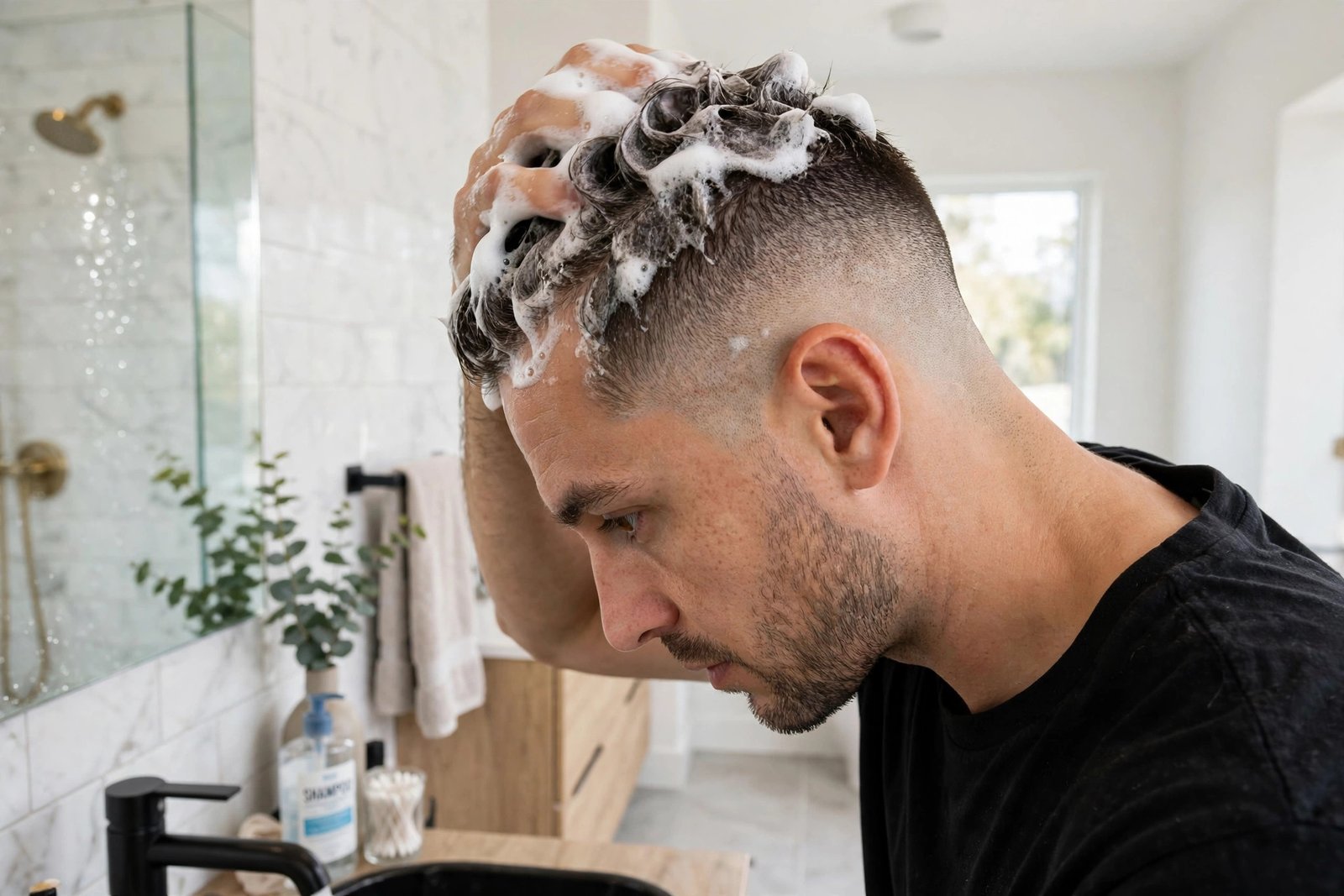
- Work it in your palms first, then go to the scalp. Apply with fingertips (not nails) and massage in small circles for a full 30 to 60 seconds. This massage is the actual cleaning step — it loosens oil, flakes, and product so the rinse can carry them away. Most men rinse after five seconds and then blame the shampoo.
- Let the rinse do the hair. As you rinse, the shampoo running through the short length cleans it. You do not need to scrub the ends of two-inch hair.
- Repeat only if you need to. A second wash is worth it after several days of product build-up or a very oily scalp. For a daily washer, one wash is almost always enough.
- Condition the top only, if you condition at all, keeping it off the scalp, then rinse well.
- Dry gently. Pat with a towel rather than scrubbing — on wavy hair, aggressive towel-drying is a frizz machine. Style on hair in the state your product wants: most matte products grip best on fully dry hair, while the best pomade for men’s short hair guide explains which finishes prefer damp hair.
Price bands: what your money actually buys
Treat prices in bands, because they vary by retailer and region and change over time. Shampoos for men sit in three broad bands: a budget band (under about $10 a bottle, mostly drugstore and supermarket labels), a mid band (about $10 to $20, where most barber and grooming brands and most anti-dandruff specialists live), and a premium band (above about $20, mostly salon and boutique labels).
What moving up a band usually buys is a more refined fragrance, a gentler or more specialised cleansing system, and a nicer washing experience. What it does not buy is categorically cleaner hair — a budget shampoo matched to an oily scalp will outperform a premium shampoo matched to the wrong problem every time. For most men with short hair, the mid band is the sensible default: it is where the dedicated anti-dandruff formulas, the sulfate-free options, and the barber brands all sit, and a bottle lasts a long time when a wash uses a coin-sized amount. The one false economy to avoid is buying a big budget 2-in-1 for a scalp problem it was never formulated to treat.
Common shampoo mistakes with short hair
Using body wash or bar soap on your head. Both are formulated for skin, not for removing styling product and scalp oil together, and both tend to leave short hair dull and the scalp dry or irritated. In an emergency, once, it will not ruin anything — as a routine, it is a downgrade.
Washing the hair and ignoring the scalp. On short hair the scalp is where the oil, flakes, and build-up are. Thirty seconds of fingertip massage matters more than which bottle you bought.
Over-washing wavy and curly hair. Daily strong shampoo is the most common cause of the frizz and puff men blame on their haircut. Drop the frequency before you change the cut.
Under-washing heavy product. The opposite error: clay and wax users who wash twice a week with a gentle formula end up styling on top of old product, which is why their hair looks heavy by week two. Add a clarifying wash or wash more often.
Using anti-dandruff shampoo like normal shampoo. Lather, rinse immediately, once a week, then concluding it does not work. The actives need contact time on the scalp and several weeks of use as directed.
Judging a shampoo after one wash. Give a new shampoo at least a week of normal use — unless it irritates your scalp, in which case stop immediately. First impressions are distorted by the build-up the previous routine left behind.
Frequently asked questions
What is the best shampoo for men’s short hair overall?
There is no single bottle that is best for everyone, because the deciding factor is your scalp and hair type. For most men with short hair and a normal-to-oily scalp, a balanced mid-band shampoo with a proper cleansing base is the right default. Fine hair does better with a lightweight formula, wavy and curly hair with a gentler one, and a flaky scalp needs a dedicated anti-dandruff product rather than a general shampoo.
Should men with short hair shampoo every day?
Only if your scalp needs it. Oily scalps, fine hair, daily workouts, and daily styling product are all good reasons to wash daily with a gentle formula. Wavy, curly, coarse, and dry hair usually look better washed every two to three days. The rule is to match frequency to how fast your scalp actually gets oily, not to a fixed habit.
Is sulfate-free shampoo better for short hair?
Not automatically. Sulfate-free formulas are gentler, which suits dry, curly, coarse, and frequently washed hair. Oily scalps and men washing out heavy clay or wax a few times a week often clean better with a traditional sulfate-based cleanser. Match the strength to the job.
Do men with fades need special shampoo?
No special category exists, and you do not need one — but fade wearers should care more about scalp condition, because the scalp is visible. A shampoo that keeps flakes and oil under control, plus moisturiser or sunscreen on exposed scalp in strong sun, matters more for a skin fade than for any covered style.
Can shampoo make short hair look thicker?
It can make it look fuller for the day by removing oil that clumps strands together and by avoiding conditioning weight — which is a real, visible difference on fine hair. It cannot grow hair or permanently change how thick a strand is, whatever the bottle claims.
How much shampoo should I use on short hair?
Less than you probably do. A coin-sized amount, worked between wet palms and massaged into the scalp for 30 to 60 seconds, is enough for almost any short cut. Using double changes nothing except how much you spend and how dry your scalp gets.
Is 2-in-1 shampoo and conditioner okay for short hair?
For short, low-maintenance styles with a healthy scalp, yes — it is a reasonable, simple option. It is a compromise, though: heavy styling-product users usually need stronger cleansing than a 2-in-1 gives, and flaky scalps need a dedicated anti-dandruff shampoo rather than a combined product.
The bottom line
The best shampoo for men’s short hair is the one matched to your scalp first and your hair type second: strong enough to clear oil and the styling product you actually use, gentle enough for how often you wash, and light or rich in conditioning according to whether your hair is fine or coarse. Get the massage step right, wash at the frequency your scalp asks for, and treat flakes with a dedicated product used as directed. Short hair is the easiest hair to keep looking clean — as long as the bottle in your shower was chosen for the head it is actually washing.